Categories
Blog

Solana Price Prediction: Is Solana A Good Investment?

In the fast-changing world of cryptocurrency, some blockchain platforms stand out. Solana is one of these platforms. It has gained attention for its high speed and efficiency.

This leads to an important question: is Solana a good investment?

To answer this, we need to look closely at its technology and market trends. Making smart choices means looking beyond just current prices. We must consider the key facts about the asset.

Solana has seen big highs and lows in value. This shows how unstable the crypto market can be. This article gives a fact-based view on Solana’s blockchain and ecosystem. We will study its performance and compare it to other options in the market.

Additionally, we will look at possible risks involved. This will help you decide if buying SOL tokens fits your money plans and comfort with risk. Remember, this article is not financial or trading advice.

Solana: Technology and Ecosystem

Solana: Technology and Ecosystem

Solana is a fast blockchain made for apps and crypto projects. It is built to grow and solve issues found in other blockchains.

Solana has quickly become a center for many uses. These uses include decentralized finance (DeFi) and non-fungible tokens (NFTs). This has drawn in a global group of users and creators. Its power comes from processing many transactions quickly and cheaply.

This makes it attractive for developers who want high speed and smooth user experiences. The rising interest in Solana shows its tech skills and its chance to help create the next wave of web3 apps.

Core Features of the Solana Blockchain

The Solana blockchain is special because of its unique features. It is built for high performance. It can process fast transactions at low costs compared to other blockchains.

Solana’s system can handle thousands of transactions every second.

This leads to low fees, which helps regular users and traders who trade often. Solana also allows smart contracts. This lets developers make complex apps for lending, borrowing, trading, and more.

All this happens in a safe and fair way. The design of Solana helps apps grow well, which boosts new ideas in the crypto world.

With its low costs and strong smart contract tools, Solana is a great option for developers.

Key Innovations Driving Solana’s Performance

Solana does well because of its smart tech ideas.

One key idea is its unique way to agree on data, called Proof-of-History (PoH). PoH keeps track of past deals.

It lets the network check them without talking all the time between nodes. This cuts down the time needed to process transactions a lot. This main idea works with other tools to allow many deals at once.

Because of this, Solana can go faster than many other big blockchain platforms. It can handle lots of fast trades and still keep fees low when demand is high. This new method makes Solana a strong choice for market power.

Is Solana A Good Investment?

Is Solana A Good Investment?

Evaluating Solana as an investment needs a careful look. Its price can change a lot. It is affected by tech changes, market mood, and general trends.

Long-term investors should think about whether the Solana blockchain can keep growing. They also need to see if it can be widely used.

Right now, there is strong interest in fast blockchains, which helps Solana. Still, the crypto market is unpredictable. This means that what happened before does not promise what will happen next.

Doing good research is very important. Investors should compare the platform’s strengths with risks like competition and tech issues.

It is also smart to match your investment choices with your money goals and how much risk you can take.

Analyst Projections for 2025 and Beyond

Price guesses for cryptocurrencies are often unsure. However, they can show current feelings and future paths.

Many experts think Solana will do well. This is based on the growth of its ecosystem. More developers are also getting involved with Solana. There is more interest from big businesses too.

A good view suggests that Solana will take market space from rivals. It also hopes to keep its tech steady.

If things go well and more people use it, the total worth could grow. This would raise SOL token prices too.

However, these guesses rely on real-world events and market changes.

Factors Influencing Solana’s Long-Term Value

Many key factors will affect Solana’s long-term value. First, the growth of its dApp ecosystem is important. A strong space in DeFi, NFTs, and gaming will bring in users and developers. This will increase demand for SOL tokens.

Second, institutional adoption is also key. More investment from big investors can raise market value and trust.

Third, the network must keep its performance and security high. It is important to avoid outages. This helps build trust and encourages more people to use it. Lastly, Solana’s supply is a big part of its economic model.

What to Expect From Solana Price Analysis?

When looking at Solana’s price, be ready for big changes. The daily SOL chart shows sharp moves. These moves are often due to news and market feelings. Other trends in cryptocurrency also affect it. While some technical tools can find support and resistance levels, they cannot predict future prices for sure. Investors should get ready for random price swings that are usual for digital assets. High trading amounts show strong interest from investors and might come before big price moves. Keeping an eye on average trading prices over different timeframes helps to see the main trend through short-term noise. In the end, any review must think about the asset’s high volatility.

Solana’s Historical Price Performance

Solana’s Historical Price Performance

Solana’s price history shows quick growth and sharp drops. It has become one of the top crypto coins since it started.

This rise has made it a sign of how much people like fast blockchain platforms. Its value went up a lot during the last big market rise. This shows how excited people are about its new ideas and the chance to compete with old players.

However, like all crypto coins, Solana saw a big drop in the next market fall. This tested how much faith investors had in it.

Major Milestones in SOL Price History

A big moment in Solana’s story was hitting its all-time high (ATH).

This showed a great return for early investors. It also made Solana more important in the crypto world. This peak happened because of fast growth in its DeFi area. The rise of NFTs also helped, along with good feelings in the market.

Another important time was when it bounced back from drops. Solana showed it could recover after sharp falls. These ups and downs show both inside changes and outside market trends. The performance of the SOL token gives clues about its long-term chances.

Analysis of Previous Market Cycles

An analysis of previous market cycles reveals that the Solana price is highly correlated with the broader cryptocurrency market, particularly the movements of Bitcoin.

During bull markets, growing interest and capital inflows into the crypto space have historically benefited Solana, leading to a significant increase in its market capitalization.

Conversely, during a bear market, the price of Solana has tended to fall sharply along with other digital assets.

These cycles also highlight the impact of ecosystem developments on price. For instance, the emergence of popular Solana meme coins and successful dApp launches has, at times, created positive momentum for SOL trading, independent of broader market trends. These events can lead to spikes in trading volumes and attract new waves of regular crypto users to the Solana network, influencing its current price.

Comparing Solana With Other Layer 1 Blockchains

Comparing Solana With Other Layer 1 Blockchains

To fully assess Solana’s position, it is helpful to compare it with other leading Layer 1 blockchain platforms.

The competition for market dominance in this sector is fierce, with each platform offering a different set of trade-offs in terms of speed, security, and decentralization. Solana has emerged as a strong contender, primarily due to its focus on scalability and low transaction costs.

Its main rivals include Ethereum, the pioneer of smart contracts, as well as other high-performance chains like Avalanche and Cardano. Each of these platforms is vying to become the foundational layer for the future of decentralized applications.

An investor’s decision may come down to which platform’s technological vision and ecosystem growth seem most promising for the long term.

Solana Vs. Ethereum: Speed and Costs

The main comparison is between Solana and Ethereum. Solana works faster and handles more transactions. This is good for users.

In contrast, Ethereum has faced delays in the past. These delays lead to slow transactions and high fees. Solana is built for many low-cost transactions. This makes it great for gaming and quick trading in finance.

However, Ethereum has a bigger network that is better known. It also offers more decentralization. This matters to many users and developers.

Solana Vs. Avalanche and Other Competitors

Beyond Ethereum, Solana also competes with other platforms like Avalanche, which also offers fast transaction speeds and a scalable architecture. Both platforms are strong contenders in the race to build the most efficient infrastructure for dApps. The competition often comes down to the strength of their respective ecosystems, the pace of innovation, and their ability to attract developer talent.

The growing interest in these alternative Layer 1 solutions signals that the market is looking for viable alternatives to Ethereum.

Solana’s future success will depend on its ability to continue innovating and expanding the Solana ecosystem faster than its rivals.

Its performance relative to these competitors is a key metric to watch when evaluating its potential for long term growth and achieving greater market dominance.

Institutional Adoption and Developer Activity

Two of the most powerful catalysts for a blockchain’s success are developer activity and institutional adoption.

A thriving developer community builds the applications that attract users, creating a vibrant and useful ecosystem. Meanwhile, institutional investment provides capital, liquidity, and a stamp of legitimacy that can fuel further growth and widespread adoption.

For Solana, both of these areas have shown promising signs. The platform has actively courted developers with grants and support, while its high performance has caught the eye of large-scale investors. This combination has been a significant factor in the rise of Solana and will be critical for its continued expansion in the coming years.

Growth in the Solana Developer Community

The developer community on the Solana blockchain has been expanding at a rapid pace.

The platform’s performance advantages, including low transaction costs and high throughput, make it an appealing environment for building scalable dApps. This has led to a surge in projects launching on Solana, spanning DeFi, NFTs, gaming, and more.

This growth is a leading indicator of the health and potential of the Solana ecosystem.

A robust developer base ensures a continuous stream of new use cases and innovations, which in turn attracts more users and increase the total value within the network. The continued expansion of this community is a positive sign for Solana’s prospects.

Rising Institutional Interest in SOL

There is clear evidence of rising institutional interest in SOL tokens.

Major investment funds and asset managers have begun to include Solana in their digital asset portfolios, drawn by its strong technology and growing market capitalization. This institutional capital provides stability and liquidity to the market for SOL trading.

This trend is significant because it suggests that sophisticated investors see Solana as a viable long-term investment.

The presence of institutional players can also pave the way for new financial products, such as Solana ETFs, which would make it even easier for mainstream investors to gain exposure. This growing interest from institutions is a strong vote of confidence in the Solana network.

On-Chain Activity and Ecosystem Expansion

On-chain activity is a direct measure of a blockchain’s utility and adoption. High levels of on-chain activity, such as a large number of daily transactions and active wallets, indicate that a network is being actively used.

For Solana, on-chain metrics have consistently shown strong growth, reflecting the expansion of its ecosystem.

This expansion has been driven by several key sectors, each contributing to the network’s overall vibrancy. The growth of these sectors not only increases demand for SOL tokens but also strengthens the network’s value proposition.

A dynamic ecosystem with a wide array of applications is essential for achieving widespread adoption.

Growth of DeFi, NFTs, and Memecoins on Solana

The Solana ecosystem has become a hotbed for innovation in several key areas.

Its decentralized finance sector has grown rapidly, with numerous platforms offering lending, borrowing, and trading services at a fraction of the cost of Ethereum. This has made DeFi more accessible to regular crypto users.

At the same time, Solana has emerged as a leading platform for NFTs, thanks to its low transaction fees for minting and trading. The rise of Solana meme coins has also brought a significant amount of attention and trading volumes to the network.

While speculative, this activity has introduced a new wave of users to the Solana blockchain and its capabilities.

Impact of Solana Mobile and New Use Cases

Solana is also pushing the boundaries of what a blockchain can do with initiatives like Solana Mobile.

The launch of its web3-enabled smartphone is a bold attempt to accelerate the widespread adoption of decentralized technologies by integrating them directly into the hardware. This could open up a host of new use cases and bring crypto closer to everyday life.

These kinds of forward-thinking projects demonstrate Solana’s innovative approach and its commitment to long-term growth.

By expanding beyond traditional dApps and into new areas like mobile technology, the Solana network is working to build a more integrated and user-friendly crypto space. The success of these initiatives could be a major catalyst for Solana’s price in the future.

Risks and Challenges of Investing in Solana

Risks and Challenges of Investing in Solana

No investment is without its challenges, and Solana is no exception.

While the platform has immense potential, investors must be aware of the potential risks before making any investment decisions. These risks span technical, security, and market-related concerns, all of which could impact the long-term viability and price of Solana.

A comprehensive assessment requires a clear-eyed view of these challenges. Acknowledging and monitoring these risks is a key part of responsible investing. Performing their research into these areas is critical for anyone considering adding SOL tokens to their portfolio.

Technical and Security Concerns

One of the most significant concerns for the Solana network has been its history of network outages. The platform has experienced several periods of downtime, which have raised questions about its stability and reliability.

While the developers are actively working to improve the network’s resilience, these outages have damaged investor confidence in the past.

These technical challenges underscore the complexity of building a high-performance blockchain. Any future instances of network instability could negatively affect market sentiment and the Solana price. The security of its consensus mechanism and its ability to withstand attacks are also ongoing areas of focus for the community and potential points of concern for investors.

Regulatory and Market Risks

Like all assets in the crypto market, Solana is subject to significant regulatory risk. The legal landscape for digital assets is still evolving, and future regulatory changes could have a profound impact on the entire industry. Unfavorable local regulations or a global crackdown on cryptocurrencies could stifle innovation and negatively affect investor sentiment, leading to a downturn in the price of Solana.

Furthermore, the inherent high volatility of the cryptocurrency market remains a major risk. The Solana price can experience dramatic swings in a short period, and investors must have the risk tolerance to withstand this price volatility. Broader market conditions, such as a prolonged bear market, could also put downward pressure on the value of SOL tokens, regardless of the progress made within the Solana ecosystem.

Conclusion

Deciding if Solana is a good investment is not easy. There are strong points on both sides. Its new blockchain design allows for fast transactions and low costs. This helps create a growing network of apps, NFTs, and developers. Interest from big companies also boosts its chances for the future. However, there are big risks too. Past problems with the network raise worries about trust.

Some rules could affect the whole crypto world. While you can make a lot of money, you can also lose a lot due to wild price changes. In the end, investing in Solana depends on your risk level and faith in its future.

This article does not give any investment or trading tips. We urge everyone to do careful research before making choices.

FAQ’s:

Is Solana A Good Investment For Long-Term Holders?

For investors with a long term horizon and a high risk tolerance, Solana may be considered a good investment. Its strong technology, growing Solana ecosystem, and potential for widespread adoption are positive indicators. However, the high volatility and potential risks, such as network outages and regulatory changes, must be carefully considered. It requires thorough research.

What is the ATH of Solana?

Solana’s all-time high (ATH) price was approximately $260, reached in November 2021. This peak in Solana’s price occurred during a period of intense positive market sentiment and rapid growth in the broader cryptocurrency market.

Can the Solana Price Crash?

Yes, the price of Solana can drop. Like all digital assets, it is very sensitive to price changes. Market feelings can change quickly. A crash may happen due to bad market conditions. It could also occur in a long bear market. Negative laws could play a part, too.

Major technical problems with the Solana network can cause issues as well.

Is Solana A Scam Or Legit?

Solana is a real blockchain project. It has a clear team that works on it. The tech behind Solana is strong. There is also a big and active group of users. Many big investors support it. The Solana ecosystem is growing well. This project is not a scam.

However, it comes with a high risk. This is because of how the crypto market works.

How High Can Solana Realistically Go?

Price predictions vary widely, and it’s impossible to say with certainty. A bullish scenario could see the price rising significantly in the coming years if it achieves greater market dominance and widespread adoption. Reaching a new all-time high is plausible under favorable market conditions, but this is highly speculative. The ultimate price of Solana depends on many factors.

Can Solana Reach $500?

Reaching a price of Solana of $500 would require a substantial increase in its market capitalization, likely surpassing its previous time high. This would necessitate very positive market conditions, massive institutional inflows, continued expansion of its use cases, and a significant increase in its share of the crypto market.

While theoretically possible in a very bullish scenario, it is a highly optimistic target at the time of writing.

Categories
Blog

Is Coinbase Wallet Safer Than Coinbase? Know the Difference

The Coin Investor champions smart, informed investing in digital assets, guiding both newcomers and seasoned crypto investors through a rapidly evolving space. As the gateway to cryptocurrencies, choosing between a custodial exchange account and a non-custodial crypto wallet is foundational to long-term wealth preservation.

This comprehensive guide delves into Coinbase and Coinbase Wallet, comparing security measures, supported features, and practical use cases. Whether you manage Bitcoin, Litecoin, ETH, NFTS, or engage with Dapps on Polygon and Solana, understanding custodial vs. non-custodial storage empowers you to protect your holdings, optimize transaction fees, and maintain full control of private keys.

Coinbase and Coinbase Wallet

Coinbase and Coinbase Wallet

What Is Coinbase?

Coinbase is a leading crypto exchange and gateway for digital assets in the United States.

As a custodial platform, Coinbase holds private keys on behalf of users, providing insurance coverage for custodial wallets and a responsive customer support team to resolve password resets or suspicious email alerts.

With a Coinbase exchange account, you can fund your wallet via bank transfers or credit cards, trade a wide range of cryptocurrencies—including BTC, ETH, LTC, Polygon tokens, Solana, and more—and stake select tokens for passive rewards.

The coinbase mobile app on Android and iOS offers robust security measures: two-factor authentication (2FA) via SMS or authenticator apps, biometric login, and optional hardware security keys.

Funds are stored in geographically dispersed cold storage vaults with AES-256 encryption, and a portion remains liquid for daily withdrawals.

What Is Coinbase Wallet?

Coinbase Wallet is a standalone crypto wallet—available as a browser extension and mobile app—that grants users complete control of private keys and seed phrase. Unlike custodial wallets, Coinbase Wallet places responsibility for encryption, recovery phrase backup, and device security squarely on the wallet owner.

Users can connect directly to dapps, swap tokens across dozens of blockchains, and manage nfts within a single interface.

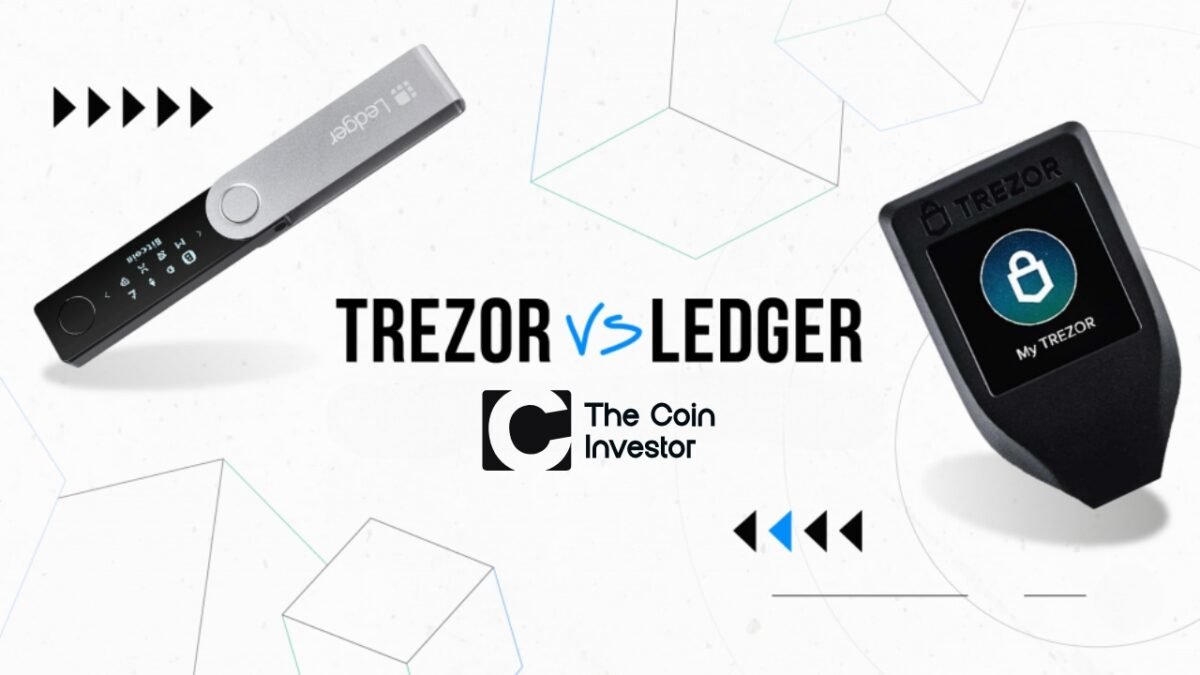
The wallet integrates seamlessly with hardware wallets such as Ledger and Trezor, enabling cold storage for maximum protection against hackers and malware.

Without access to a Coinbase exchange account, you can still send and receive digital assets using your wallet address, sign transactions offline, and maintain full control of private keys.

Is Coinbase Wallet Safer Than Coinbase?

Is Coinbase Wallet Safer Than Coinbase?

Custodial vs. Non-Custodial Storage

Custodial wallets, like Coinbase, keep your private keys on safe servers.

They manage tasks like encryption and storage. If you forget your password or lose your device, support can help. They assist through email checks and ID verification. But custodial wallets have risks. If the exchange is hacked or closes, you might lose your money.

On the other hand, non-custodial wallets, like Coinbase Wallet, let you control your private keys and recovery phrase. This removes third-party risk but makes you responsible for safety. Good practices are important here. Use a hardware wallet for cold storage.

Back up your seed phrase in safe spots. Also, create strong and unique passwords for each wallet file.

Supported Features and Use Cases

A Coinbase exchange account makes it easy to buy using cash. It has a simple sign-up process.

The fees can change based on how you pay. You can also stake some coins directly on the platform. This account is great for new users, traders, and long-term investors who want help and simplicity.

Coinbase Wallet lets you use many types of cryptocurrencies. You can swap tokens at good rates and access NFTs. It also connects to DeFi services through apps called dapps. This wallet is perfect for skilled investors and those into DeFi who want to manage their own keys. They prefer less need for central security.

You can use a browser add-on to connect easily with decentralized exchanges, lending sites, and NFT shops. Your seed phrase will stay safe while you trade and invest.

How to Connect Coinbase Wallet to Coinbase?

How to Connect Coinbase Wallet to Coinbase?

Mobile:

  1. Install and open the Coinbase Wallet app (iOS/Android).
  2. Tap Settings (bottom right) → Connect to Coinbase.
  3. Sign in with your Coinbase.com email and password.
  4. Complete two-factor authentication (2FA) or biometric verification.
  5. Tap Authorize to grant permissions.

Browser Extension:

  1. Install the Coinbase Wallet extension (Chrome/Firefox/Edge).
  2. Click the wallet icon → Add CryptoAdd crypto with Coinbase On-ramp.
  3. Sign in with your Coinbase.com credentials and finish 2FA.
  4. Approve the authorization popup.

Transferring Funds:

  • To Wallet: In the Coinbase app, tap TransferSend Crypto, choose an asset, select your Coinbase Wallet address, enter amount, and confirm.
  • To Exchange: In Coinbase Wallet, go to Payments, choose an asset, tap Send, enter your Coinbase email or wallet address, and confirm.

Note: Linked accounts share your exchange balances and self-custody holdings. Standard network fees apply.

Security Measures Compared

Security Measures Compared

How Coinbase Safeguards User Funds?

Coinbase implements strong security features across its exchange platform:

  • Two-factor authentication (2FA) options: SMS, authenticator apps, and hardware security keys.
  • Insurance policy covering custodial wallets against exchange breaches, protecting crypto holdings up to policy limits.
  • Cold storage for more than 98% of customer funds, secured in vaults with time-locked withdrawals and multi-party approval.
  • Regular audits by third-party security firms and compliance with SEC, FinCEN, and state money transmitter regulations.
  • Real-time monitoring for suspicious activity, email notifications for withdrawals, and optional withdrawal whitelist for addresses.

Security Features of Coinbase Wallet

Coinbase Wallet’s non-custodial architecture delivers:

  • Full control of private keys and seed phrase stored locally on device or hardware wallet.
  • Password encryption of wallet data using industry-standard AES and PBKDF2 key derivation.
  • Secure offline signing of transactions, preventing exposure of private keys to internet-connected devices.
  • Open-source codebase, allowing community audits and vulnerability reporting.
  • Support for cold storage via USB hardware wallets, isolating private keys from malware-prone devices.

Pros and Cons For U.S. Crypto Users

Pros and Cons For U.S. Crypto Users

Advantages of Using Coinbase

Advantage Details
Ease of Use Intuitive mobile app, streamlined account setup, direct fiat on-ramps for USD, EUR, GBP
Robust Security Measures Custodial insurance, 98% of funds in cold storage vaults, 2FA, hardware key support, compliance with SEC and FinCEN
Customer Support Dedicated support via email, live chat, and phone, with fast resolution for password resets and transaction issues
Wide Range of Cryptocurrencies Support for BTC, ETH, LTC, Polygon, Solana, numerous altcoins, stablecoins, and staking options

Pros and Cons of Coinbase Wallet

Pros Cons
Complete Control of Private Keys User responsible for seed phrase backup; loss results in permanent loss of funds
Direct Access to dapps, NFT Markets, DeFi No integrated fiat on-ramp; requires manual crypto transfers from an exchange account
Browser Extension and Mobile App Integration Potential exposure to phishing, browser vulnerabilities, and mobile malware
Hardware Wallet Support Additional cost and setup complexity; users must manage device firmware and physical security of the hardware wallet

Types of Crypto Wallets

Types of Crypto Wallets

  • Hot Wallets: Hot wallets remain connected to the internet, offering convenience for frequent transactions, staking, and quick access to crypto exchange platforms. Examples include Coinbase Wallet, MetaMask, and mobile app wallets. Their “always-online” nature, however, exposes them to hackers, phishing scams, and malware vulnerabilities.
  • Cold Wallets: Cold wallets store private keys offline, eliminating exposure to internet-based attacks. Hardware wallets like Ledger and Trezor, paper wallets, and air-gapped offline systems provide the strongest protection for long-term holdings. Users must securely store their recovery phrase, ideally in multiple geographically dispersed locations, to guard against physical theft, fire, or water damage.

Conclusion

Coinbase and Coinbase Wallet each serve distinct needs in the crypto ecosystem. Coinbase excels as a custodial crypto exchange with strong security measures, dedicated customer support, and simple fiat on-ramps—ideal for beginners and traders seeking convenience.

Coinbase Wallet offers complete control of private keys, seamless dapp access, and cold storage integration, catering to advanced crypto investors, DeFi enthusiasts, and those prioritizing self-custody.

Your choice hinges on risk tolerance, technical proficiency, and whether you value convenience or full control of your digital assets.

FAQ’s:

Is it Better to Use Coinbase or Coinbase Wallet?

Opt for Coinbase if you prefer custodial support, fiat on-ramps, and insurance coverage. Choose Coinbase Wallet for non-custodial security, full control of private keys, and direct DeFi access.

What Are the Benefits of a Self-Custody Wallet?

Self-custody wallets eliminate counterparty risk, allow direct interaction with blockchain networks and dapps, and ensure you remain the sole owner of private keys and recovery phrase.

Can You Send Money From Coinbase to Coinbase Wallet?

Yes. Transfers incur standard network transaction fees. Use the “Send” feature in your Coinbase exchange account to enter your Coinbase Wallet address and complete the transaction.

Can I Use Both Coinbase and Coinbase Wallet Together?

Absolutely. Many crypto investors purchase assets on the Coinbase exchange, then transfer holdings to Coinbase Wallet for staking, DeFi participation, or cold storage with hardware wallets.

What Happens to Coinbase Wallet If Coinbase Fails?

Coinbase Wallet is non-custodial; you hold your private keys and recovery phrase. Even if the Coinbase exchange ceases operations, your wallet remains fully accessible, provided you have your seed phrase stored securely.

Categories
Blog

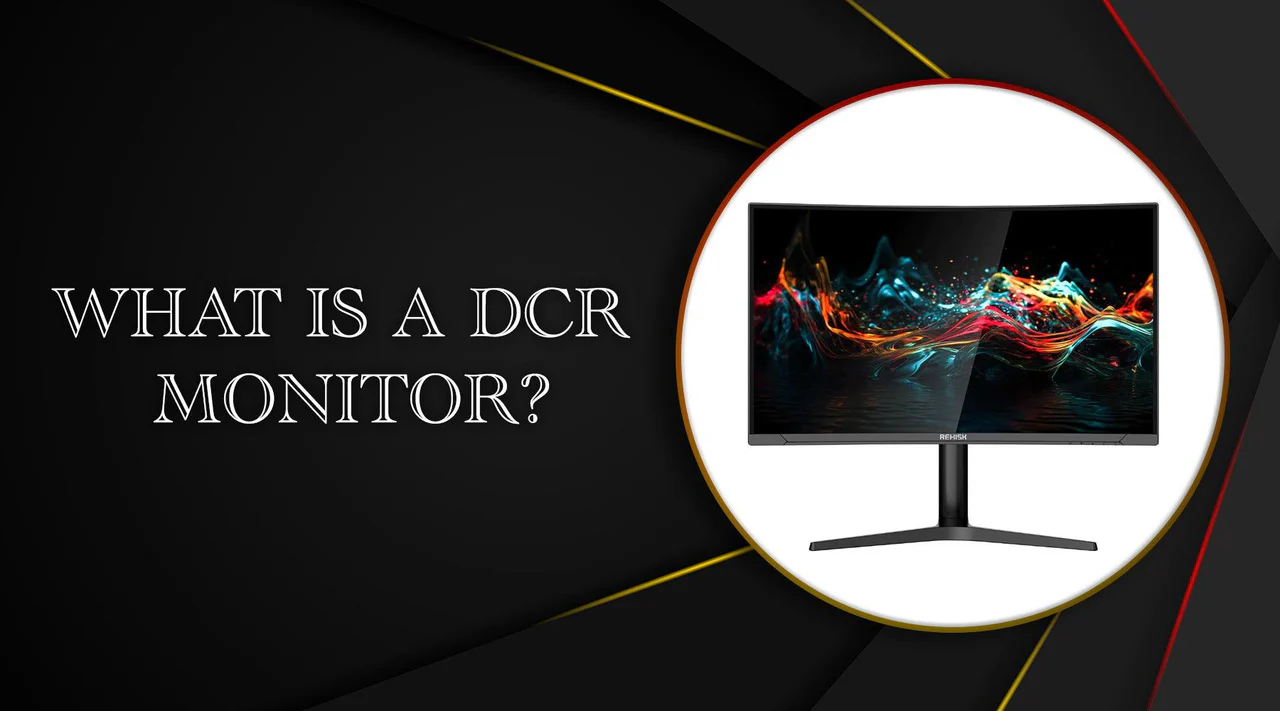
Dynamic Contrast Ratio: What Is DCR On A Monitor? The Complete Guide

The digital asset revolution has transformed how we consume content, from trading cryptocurrencies to immersive gaming experiences.

As technology investors and enthusiasts, we recognize that superior visual quality is fundamental to any digital experience.

DCR technology represents a significant advancement in display innovation, offering a powerful solution for enhancing visual performance across all digital activities.

DCR (Dynamic Contrast Ratio) on Monitors

DCR (Dynamic Contrast Ratio) on Monitors

What is DCR on a Monitor?

DCR stands for Dynamic Contrast Ratio, a sophisticated display technology that automatically adjusts your monitor’s brightness and contrast based on the content being displayed. Unlike static contrast ratio measurements, DCR technology analyzes the incoming video signal in real-time and modifies the backlight intensity to optimize image quality. This dynamic adjustment creates deeper blacks during dark scenes and brighter whites during bright scenes, resulting in enhanced visual depth and improved viewing experience.

The technology works by calculating the ratio between the brightest white and darkest black that your monitor can produce dynamically.

For example, a monitor might advertise a DCR of 1,000,000:1, meaning its brightest output can be one million times brighter than its darkest black under optimal conditions. This represents a significant improvement over traditional static contrast ratios, which typically range from 1000:1 to 3000:1 on most computer monitors.

How Does It Work?

DCR technology uses smart methods to check video signals. It also changes display settings right away. The system looks at each frame. This helps improve brightness and contrast.

In dark scenes, the backlight gets dimmer for deeper blacks. For bright scenes, the backlight gets brighter for vivid whites.

Important parts include backlight control systems and image processing tools. These tools help make changes quickly. There are also sensors that check light around the monitor for better viewing. This quick change happens in milliseconds. It is very important for gaming monitors that often switch scenes.

Why Is DCR Important for Monitor Performance?

DCR technology helps monitors work better by fixing problems with LCD panels. Normal LCDs have trouble showing true blacks.

This is because their backlights stay on all the time. This makes dark areas look gray.

DCR solves this issue by dimming the backlight in dark scenes. This allows for real black levels and better picture quality.

DCR also helps gamers see details in dark areas. This gives them an edge where seeing clearly is key. It can lower eye strain too. It does this by changing brightness to fit the content and room light. This makes watching more comfortable overall.

Monitors with DCR are great for many uses. They work well for graphics tasks and entertainment too. They improve color accuracy and visual depth, making content look more real.

Key Benefits and Drawbacks of DCR Technology

Key Benefits and Drawbacks of DCR Technology

Advantages of Using DCR in Display

DCR technology offers numerous benefits that enhance the viewing experience across different use cases.

The primary advantage is improved contrast ratio, which makes images appear more vivid and realistic. This enhancement is particularly noticeable in content with significant brightness variations, such as movies with both dark and bright scenes.

Gaming monitors with DCR technology provide several advantages for gamers. The technology can reveal details in dark areas of games, improving gameplay visibility and immersion. Response time is not negatively affected by DCR implementation, as the technology primarily adjusts backlight intensity rather than pixel switching speeds.

The technology also contributes to reduced eye strain during extended viewing sessions.

DCR technology enables higher DCR values compared to static contrast ratios, often exceeding 1,000,000:1. These impressive numbers, while not directly comparable to static ratios, indicate the technology’s ability to produce dramatic contrast improvements under optimal conditions.

Common Limitations and When DCR May Not Be Ideal

DCR technology has some benefits, but it also has clear limits.

One big problem is that it can cause color issues. The bright changes can affect how colors look. This makes DCR not good for professional work. Also, DCR might cause flickering or other problems when scenes change quickly.

This can lead to distracting bright changes. This is especially bad for gamers who need steady image quality. Additionally, how well DCR works can be different across monitor brands and models.

For example, AOC has DCR in many monitors, but its effectiveness can vary a lot based on price and type. Lastly, DCR may not be good for all types of content. Static images and color tasks may be hurt by changing brightness levels.

Alternatives to DCR Technology (Other Modern Display Solutions)

Several alternative technologies provide contrast enhancement without the potential drawbacks of DCR. Local dimming represents a more sophisticated approach to contrast enhancement, dividing the backlight into multiple zones that can be controlled independently. This technology provides more precise control over brightness and can achieve better black levels than global DCR systems.

High Dynamic Range (HDR) technology offers a more comprehensive solution for contrast and color enhancement. HDR content and displays support wider color gamuts and higher peak brightness levels, providing superior image quality compared to DCR-enhanced standard dynamic range content. However, HDR requires compatible content and hardware, making it more expensive than DCR implementations.

OLED displays represent the premium alternative to LCD monitors with DCR technology. OLED panels can achieve perfect blacks by turning off individual pixels completely, eliminating the need for backlight manipulation. While OLED monitors offer superior contrast naturally, they typically come at a higher price point than LCD monitors with DCR.

Gamma adjustment provides another approach to contrast enhancement. By modifying the gamma curve, users can achieve better contrast and brightness balance without the potential artifacts associated with DCR technology. This method offers more consistent results across different content types.

DCR vs. Other Contrast Enhancement Technologies

DCR vs. Other Contrast Enhancement Technologies

DCR vs. Static Contrast Ratio

The main difference between DCR and static contrast ratio is how they are measured.

Static contrast ratio looks at the difference between the brightest white and darkest black a monitor can show. It does this under controlled settings. This gives a good baseline for comparing display quality.

On the other hand, DCR checks the highest brightness achieved by changing the backlight. This leads to higher numbers, but it does not show high contrast in one frame.

Static contrast is very important for tasks that need accurate colors. These tasks include graphic design and photo editing because of their steady performance. DCR is better for entertainment uses. It improves contrast in moving content like movies and games.

DCR Compared to HDR and Local Dimming

High Dynamic Range (HDR) is a new tech. It makes contrast and color better than regular DCR. HDR adds more brightness and color info. This helps screens show a wider range of light.

To use HDR, special content and hardware are needed. Local dimming improves contrast compared to basic DCR.

Unlike DCR, which uses one backlight, local dimming works on many zones. This gives better dark colors.

The AOC Q27G3XMN gaming monitor has smart local dimming with 336 zones. This results in great contrast and HDR quality. It also supports high refresh rates and low lag time.

Full array local dimming uses mini LED tech for the best LCD upgrade. It has thousands of controlled zones for exact brightness, giving OLED-like performance too.

How to Use DCR on Your Monitor?

How to Use DCR on Your Monitor?

What You’ll Need to Get Started with DCR Settings?

To set up DCR on your monitor, open the on-screen menu. You can do this using the control buttons or device settings. Make sure your monitor is linked by DisplayPort or HDMI. This is important for the best performance. DisplayPort usually gives better bandwidth for clear images.

If you use a Mac, check if it works well. DCR may act differently on different systems. Also, having good room lighting helps DCR work better. It allows changes to improve contrast without too much light getting in the way.

Steps to Adjusting and Optimizing DCR

Steps to Adjusting and Optimizing DCR

Step 1: Locate DCR Settings in Your Monitor Menu

To find the DCR settings, go to your monitor’s on-screen display menu. The steps can change by brand.

Usually, you need to press the menu button first. Then use the navigation keys to find picture settings.

For MSI monitors, press ‘M‘ to open the settings. After that, go to the image section for DCR options. GIGABYTE similarly monitors work. You can find DCR in the picture menu using control buttons.

AOC gaming monitors often show DCR in their gaming menus, too. This is next to other performance features.

Keep in mind that different brands may name this setting differently.

It can be called “Dynamic Contrast,” “Adaptive Contrast,” or “Smart Contrast.” Look for choices related to automatic brightness or contrast improvement.

Step 2: Enable and Test DCR for Different Activities

Once you find the DCR settings, turn on the feature.

Then, test how it works with different types of content. Use both dark and bright scenes to see how well it works.

Movies with big lighting changes are good for testing DCR.

For gaming, try out different game types to check DCR’s effects.

Dark games may get better results, but fast games might need it turned off for a clear view. Watch for response time and flickering when playing fast games. In work tasks, check how DCR affects color accuracy and image quality carefully.

Turn off DCR for tasks that rely on color, as it usually does not help with document editing, web browsing, or work tasks.

Conclusion

DCR technology is an important step in display design. It helps improve the contrast of images in real-time.

This makes watching movies and playing games more fun. However, users should think about its limits for work that needs true colors.

DCR helps connect regular LCDs to better options like HDR or local dimming.

For those on a budget, DCR can make viewing much better if set up right. To get the most benefits, know when to turn it on or off based on what you are doing. Gaming monitors might get extra help from it, while work tasks often need steady contrast.

Check your needs and try out DCR with different types of content. This will help you see its worth for your digital use.

FAQs

What Are Some Alternatives to DCR?

There are many options to DCR technology. These options can improve contrast without changing the backlight. Local dimming splits the backlight into separate zones. Each zone can be controlled on its own for better control. HDR technology makes contrast and colors look better using smart content standards. OLED screens control each pixel by itself. This means they do not need backlight changes. Gamma adjustment allows users to change contrast by using software curves.

Can DCR Damage My Monitor?

DCR technology is safe for monitors when used correctly. It works within set limits and does not strain parts. But if DCR is done poorly, it can cause too much cycling. This may harm the backlight parts. Users should buy monitors from trusted makers. This helps to ensure good DCR use and avoids problems.

Is DCR better than HDR for gaming?

DCR and HDR play different roles in gaming. HDR gives better image quality. It has more colors and higher brightness. However, it needs special content and hardware to work. DCR boosts any content as it plays. This makes it easier to use. Monitors with good HDR give great visuals. But DCR is a cheaper option that works on more devices.

How Do I Know If My Monitor Supports DCR?

Monitor specs often show DCR support in ads and guides. You can check your monitor’s manual for DCR info. You can also look on the maker’s website for details. Most new monitors have DCR features, usually over 1,000,000:1. If your monitor supports it, you will find DCR settings in the on-screen menu.

Can DCR Cause Eye Strain or Flickering Issues?

DCR technology can cause eye strain and flickering in some cases. Quick changes in brightness can lead to annoying flickering. These automatic changes may not match the room’s light. This can make watching uncomfortable for some people. Users who are sensitive to brightness should test DCR with care. If they feel discomfort, it is best to turn DCR off.

Is the DCR important?

The role of DCR changes based on how you use it and what you watch. In entertainment like movies and games, DCR makes the view better. It does this by adding contrast and detail. But for work that needs true colors, DCR might slow down how well the screen works. This is because of the changes it makes. In the end, its value depends on what you like and how good your monitor is.

Is a higher or lower DCR better?

Higher DCR values mean better contrast, but they can be tricky. A value of 1,000,000:1 shows the best performance, but only in perfect conditions. This is not how most people use monitors. The success of DCR tech depends more on how well it is made than its numbers. It is better to focus on real-world use instead of just looking at the numbers. A DCR system that works well with lower values can do better than one with higher numbers that is poorly made.

Categories
Blog

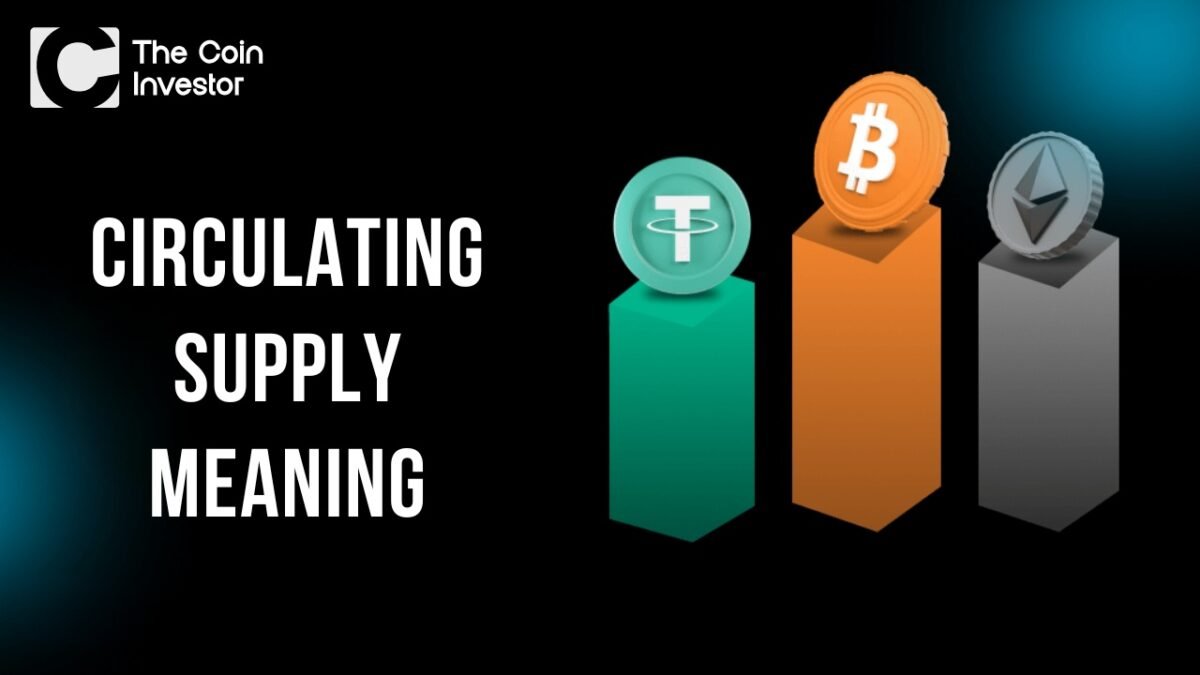
Circulating Supply Meaning – Key Difference : Max & Total Supply

In the fast-changing world of cryptocurrency, investors need clear measures to help them make smart choices.

One key measure is circulating supply. This shows how many coins or tokens are ready for trade at a specific time.

Knowing what circulating supply means helps everyone in crypto, from new users to expert traders. It helps them check market cap, assess liquidity, and judge the stability of a coin.

This article will explain the details of circulating supply. It will also look at its link to total supply and max supply.

Lastly, it will show why this measure is important for planning investments.

Circulating Supply Meaning

Circulating Supply Meaning

What is Circulating Supply and Why it is Important?

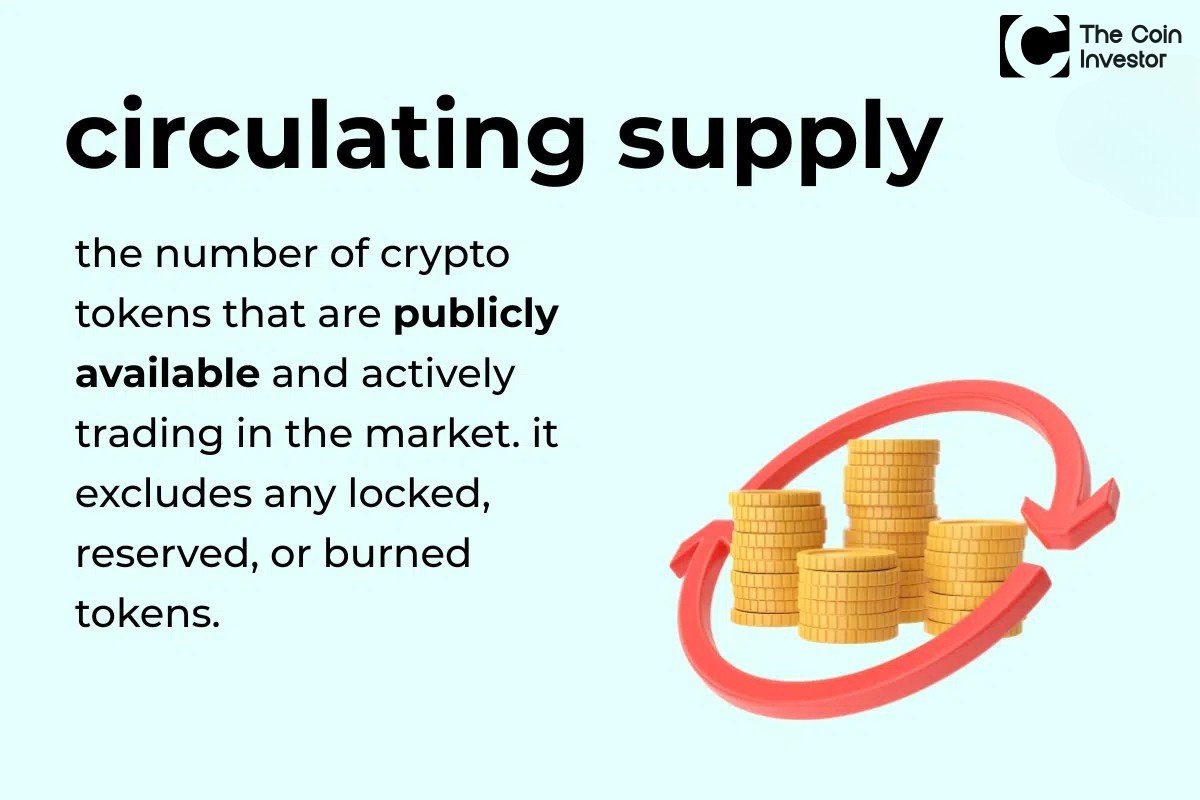
Circulating supply is the total number of coins or tokens available for use. These coins are accessible to the public through exchanges, wallets, and direct trades. This number is different from the total number of coins that could ever exist.

Circulating supply only counts crypto assets that are active and can be moved. This measure is important because it affects market price and market size. It also impacts how rare a token seems to be. A high circulating supply can make a token seem less rare.

On the other hand, a low circulating supply can create a feeling of scarcity. This feeling may lead to an increase in price over time.

Role in Cryptocurrency

In the blockchain world, miners or validators make tokens. They do this through mining and consensus methods. When new blocks are checked, new coins go into circulation. This increases the circulating supply of tokens. At the same time, token-burning methods take away some tokens from circulation. This lowers the circulating supply and may make tokens more rare. The balance between mining, minting, and burning decides how many tokens users can buy, sell, or trade.

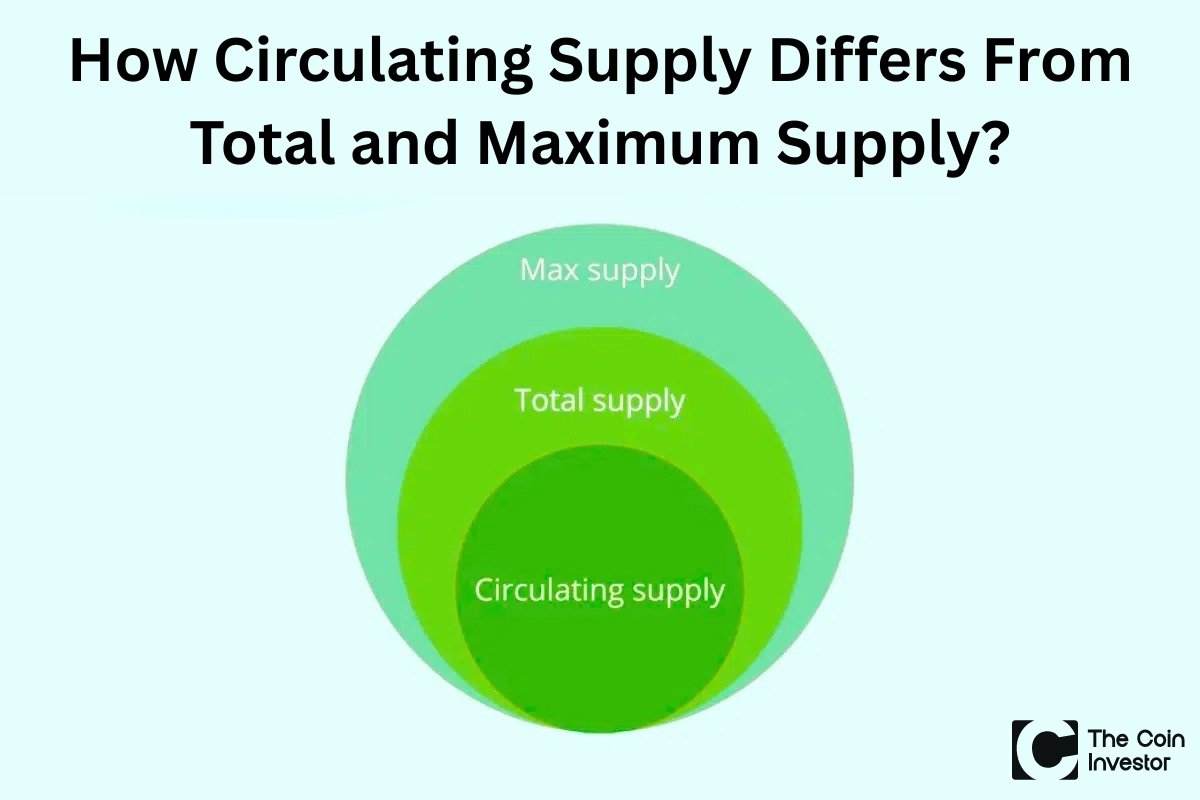
How Circulating Supply Differs From Total and Maximum Supply?

How Circulating Supply Differs From Total and Maximum Supply?

  • Total supply is the aggregate number of tokens that have been created minus any coins that have been burned. It includes coins held by project teams, locked tokens for development, and staked assets.
  • Maximum supply (or max supply) denotes the cap on the total number of coins or tokens that will ever be generated on a blockchain. For instance, Bitcoin’s maximum supply of 21 million BTC represents the uppermost limit of bitcoin issuance.
    Circulating supply sits between these concepts, representing only the subset of total supply that is live in the crypto market.

Why Circulating Supply Matters For Investors?

Why Circulating Supply Matters For Investors?

Impact on Market Capitalization

Market capitalization, or market cap, equals the current price multiplied by circulating supply. This formula underscores the importance of circulating supply: as the circulating number of coins rises, so does market cap—assuming price remains constant. Conversely, a surge in circulating supply without corresponding demand can depress market price, leading to stagnating or shrinking market cap.

Role in Assessing Coin Liquidity and Scarcity

Liquidity depends on the number of tokens that are available. It also relies on how easily they can be bought or sold. If a token has a small market cap but a high circulating supply, it may provide good liquidity.

On the other hand, a coin with low circulating supply can be hard to trade and have big price changes. Scarcity happens when the circulating supply is low compared to the total supply.

This can make prices move a lot when demand goes up.

Investors who want stability in a cryptocurrency usually like projects that have balanced circulating supply and a strong total number of coins.

Factors Affecting Circulating Supply

Factors Affecting Circulating Supply

Mining, Minting, and Burning Tokens

  • Mining and minting: On Proof-of-Work blockchains like Bitcoin (BTC), miners secure networks and mint new coins, increasing circulating supply. On Proof-of-Stake chains, validators mint new tokens by staking, similarly expanding supply.
  • Burning: Projects like Binance Coin (BNB) routinely burn tokens, removing them from circulation to reduce circulating supply and support market price.
    These mechanisms directly shape the number of tokens that traders can access via exchanges and wallets.

Locked, Staked, and Reserved Coins

A large part of the total coins may be locked by the rules. Some coins are saved for teams that build the project. Others are tasked to help keep networks safe. These locked and staked coins cannot be traded or moved until they are released.

Because of this, the real circulating supply is usually less than the total supply. This affects both the market value and how rare the money is.

How Cryptocurrency Prices Are Calculated (In Relation To Circulating Supply)?

How Cryptocurrency Prices Are Calculated (In Relation To Circulating Supply)?

Circulating supply means the total number of coins or tokens that are now available. These coins are found on the blockchain.

They can be held in wallets, exchanges, and peer-to-peer trades. This is different from total supply.

Total supply is made up of created coins minus those that are burned. Maximum supply refers to how many will ever exist.

Circulating supply impacts market cap. Market cap is found by multiplying the current price by the circulating supply. This makes it important to look at liquidity, scarcity, and stability. Miners and validators help increase circulation by mining and giving rewards.

However, burning, staking, and keeping reserved coins can reduce circulation. These changes affect trading availability and market prices. They also shape investment choices in cryptocurrency.

Cryptocurrency prices are set by bids and asks in the order book. These bids and asks match buy and sell orders.

The market cap is found by multiplying the current price by circulating supply. Investors can find the value of a token using this formula: price per token equals market cap divided by circulating supply.

Changes in circulating supply can affect value. This can happen due to miner releases, minting, or burning, unless demand changes too.

Order book depth and liquidity also affect price impact and slippage. A high circulating supply usually means better liquidity.

On the other hand, a low supply can cause rarity and price swings. Knowing about circulating supply, total coin count, and max supply is key for smart investment choices in bitcoin, altcoins, and the wider crypto market.

Conclusion

Circulating supply is a cornerstone metric in the cryptocurrency market.

By revealing the number of coins actively trading, it underpins market capitalization calculations, influences liquidity and scarcity, and provides crucial insight for investment decisions.

Whether evaluating bitcoin’s disruptive potential or assessing emerging altcoins, investors must always consider circulating supply alongside total supply and max supply metrics.

Armed with clarity on circulating supply meaning, crypto enthusiasts can chart more informed paths through the digital asset revolution.

FAQ’s:

Why is Circulating Supply Important When Evaluating Cryptocurrencies?

Circulating supply shows how many tokens are open to the public. This number affects market size, money flow, and how rare the tokens seem. It also plays a big role in price changes and choices made by investors.

Can Circulating Supply Change Over Time?

Yes. Circulating supply can go up or down. This happens through mining, minting, token releases, and burning events. Changes in supply can affect the market cap. They also change how rare a coin is.

Is High Circulating Supply Good?

A high circulating supply can help with trading. It makes sure there are enough tokens available. But if demand does not keep up with supply, it can lower token value. This may also drop the market price.

How Does A High Or Low Circulating Supply Affect A Coin’s Price?

Low circulating supply can amplify price increases during demand surges due to heightened scarcity, while high circulating supply may require greater demand to drive price gains and risks price dilution.

How Do Circulating and Total Supply Affect Price?

Circulating supply is key for figuring out market cap. It also shows how much crypto is available to buy. Total supply shows all coins made, minus any that are burned. This helps to see how many coins may be used in the future. These numbers help investors understand how rare a coin is. They also look at future price changes and how stable the coin might be.

What Does Circulating Supply Tell You?

Circulating supply shows how many cryptocurrency coins or tokens are available for trading. It tells apart those that are locked, saved, or not issued. This number is used in the market cap formula. The formula is market cap = current price × circulating supply. It affects a coin’s market value, liquidity, and price changes directly. This measure helps investors see risks of dilution and rarity in their choices.

Categories
Blog Crypto Wallet

Crypto Wallet with Chain: Enhancing the Digital Security

In the growing digital economy, it is important to manage crypto assets safely.

A cryptocurrency wallet is the main tool for using blockchain networks. It is not only for storage but also for managing assets and making transactions. Users can engage with decentralized apps (dapps) through it.

A multi-chain wallet lets users manage many cryptocurrencies from one spot, enhancing interoperability. This helps active traders, long-term holders, and beginners by making things easier and safer. Choosing the right wallet with strong chain support is key. This helps build a strong and varied digital asset collection. This guide looks at how these wallets work, their security features, and the best choices available.

Crypto Wallets with Chain: Integration for Enhanced Digital Security

Crypto Wallets with Chain

A crypto wallet with chain helps users work easily across different blockchain systems for different purposes. This lets them handle many cryptocurrencies in one place. There is no need for separate wallets anymore. These wallets support coins like Bitcoin, Ethereum, Solana, and Polygon. They offer a smooth and simple way to manage assets. The safety of these wallets can differ. Hot wallets are online and cold wallets are offline. Both types have their own security levels. Here are some top crypto wallets that provide strong support for many chains.

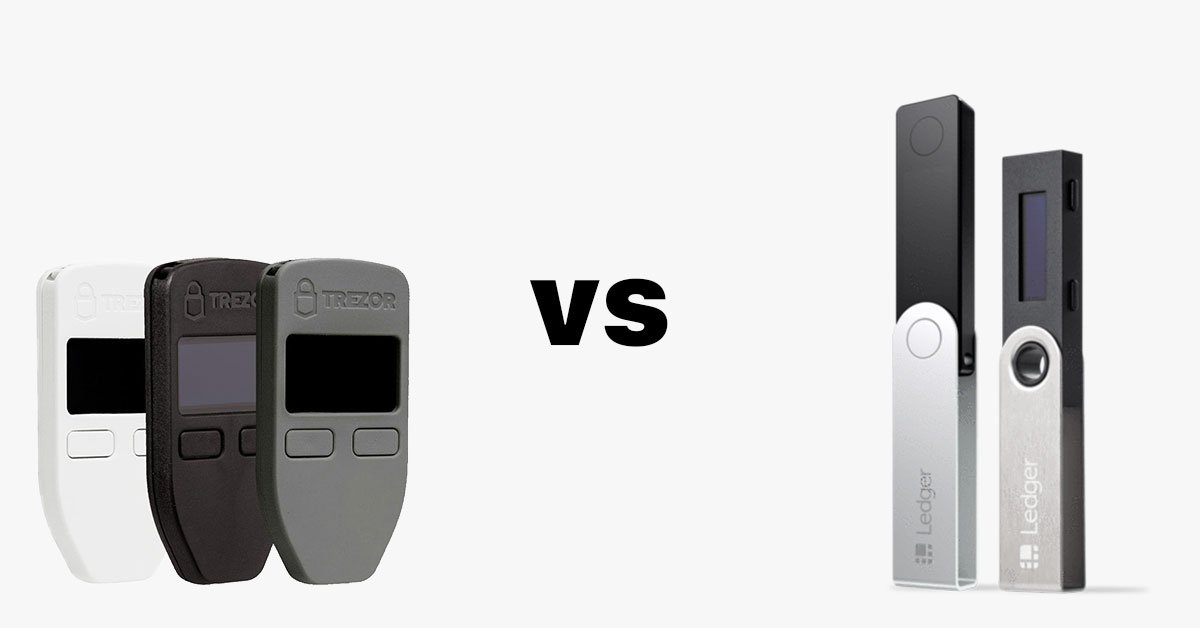
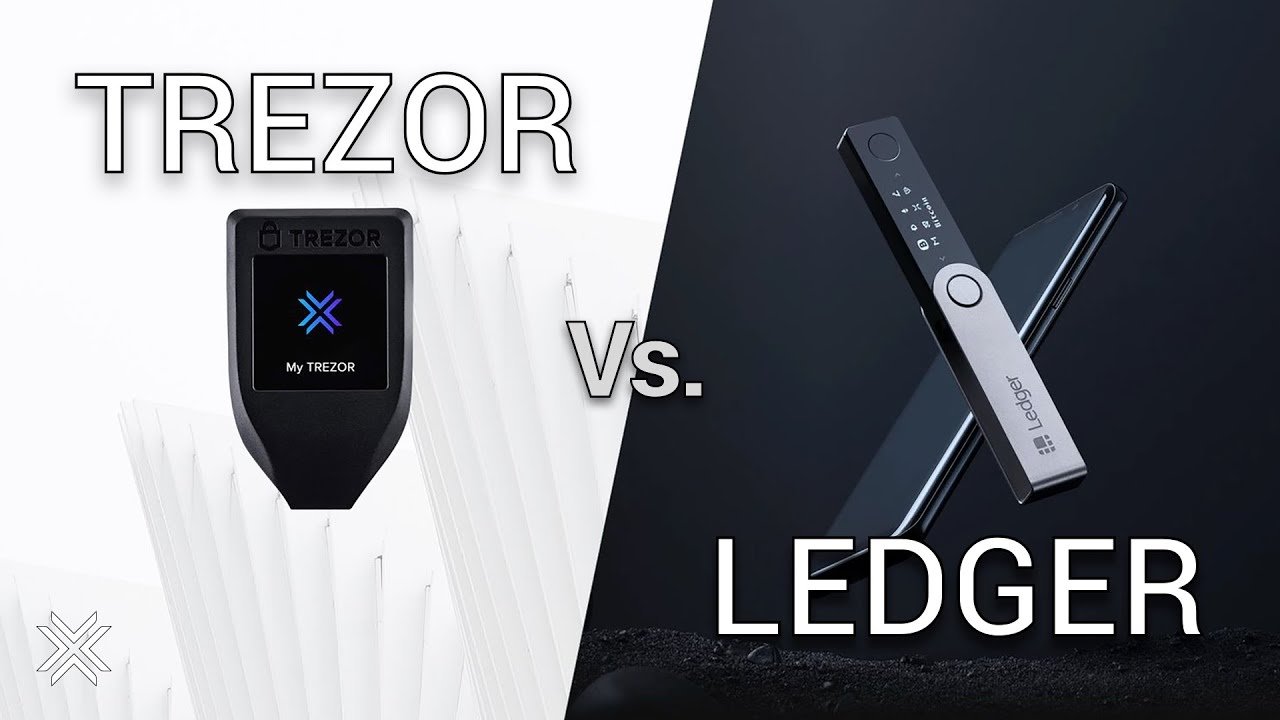
1. Ledger Nano Series: Advanced Hardware Security

Ledger Nano Series

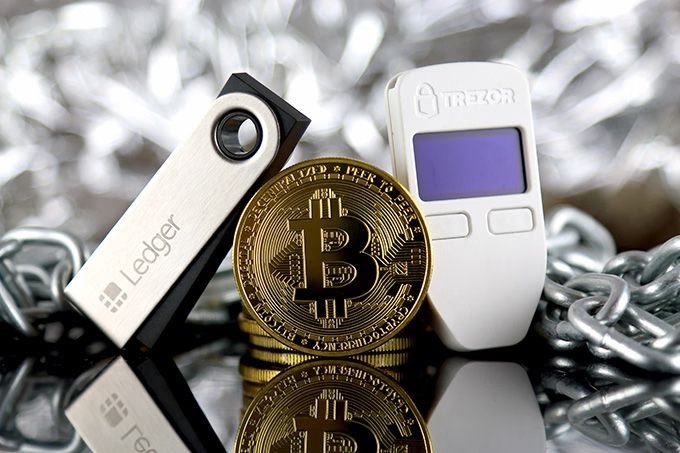
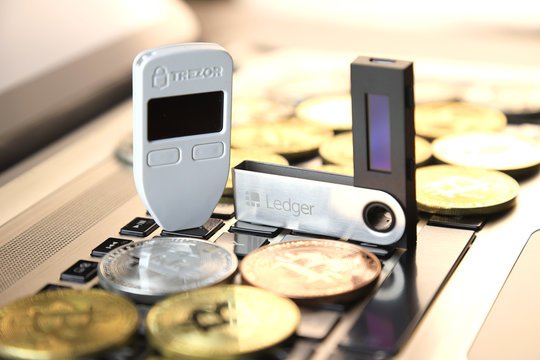
Ledger devices are well-known hardware wallets in the crypto world. They offer great safety for digital assets.

As cold wallets, they keep private keys offline. This helps protect against online hacks. The Ledger Nano series works with many cryptocurrencies across different blockchains.

Users can manage their coins using the Ledger Live app. This app is easy to use on both desktop and mobile devices. It allows staking, swapping, and managing NFTs. At the same time, it keeps private keys safe on the device. For those who care about security, Ledger is a great choice. It offers strong physical protection and works with many blockchains.

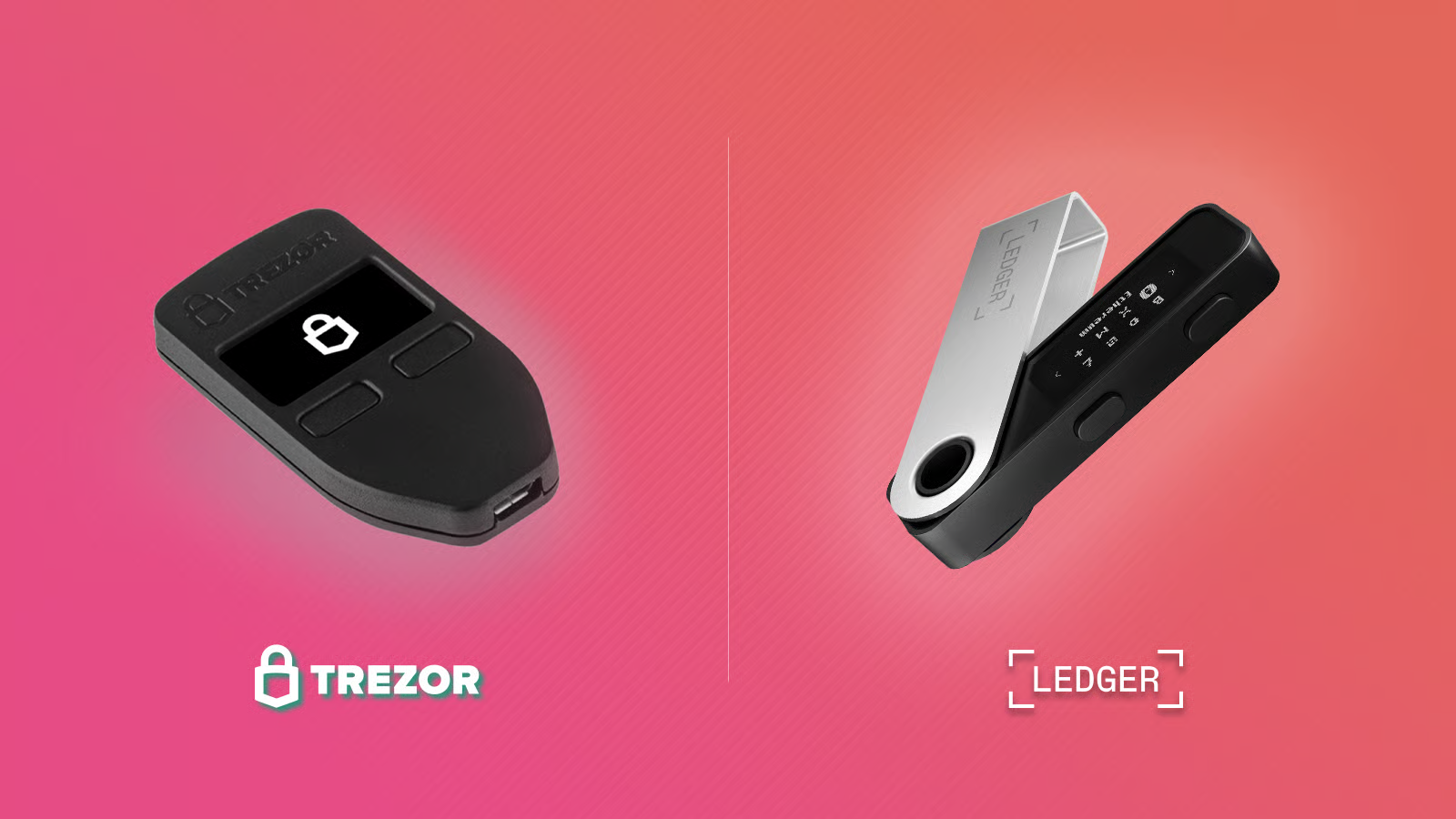
2. Trezor Suite: User-Friendly Protection

Trezor Suite

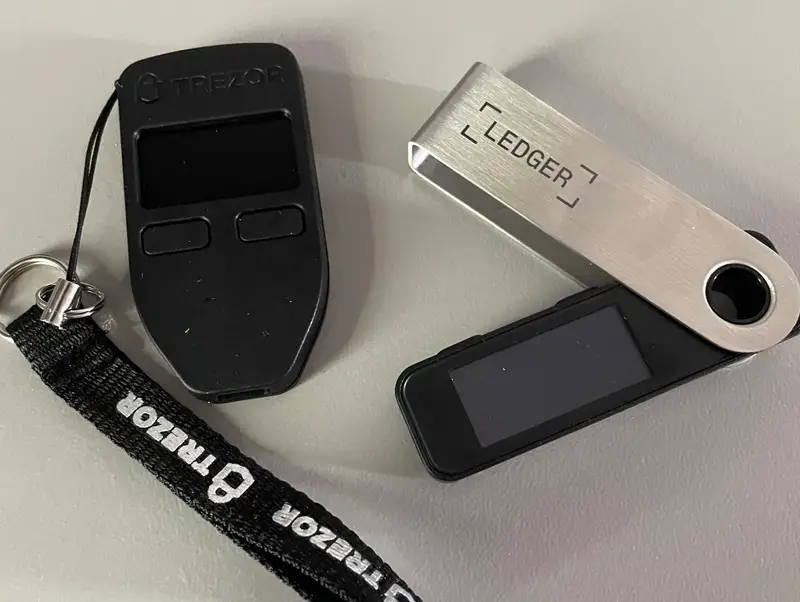
Trezor is a top name in the hardware wallet market. It is known for its strong security and open-source values. The Trezor Suite has an easy-to-use interface. This interface helps users manage different cryptocurrencies. Like Ledger, Trezor devices are cold wallets. This means private keys stay offline to keep hackers away.

The wallet works with many blockchains. It is great for holding Bitcoin, Ethereum, and thousands of other tokens. Its strong codes and simple design make Trezor a good choice. It suits both new users and expert users alike.

3. MetaMask: Popular Multi-Chain Web3 Access

MetaMask

MetaMask is the top hot wallet. It can be used as a Chrome extension or mobile app. This wallet serves as a door to Web3 and dapps. It mainly works on the Ethereum network.

However, it also supports BNB Chain, Polygon, and Avalanche. Hot wallets have more online risks than hardware wallets.

Still, MetaMask gives a safe place with password protection for crypto assets, making it suitable for both casual users and advanced users.

Its easy design makes it great for traders. It is also good for dapp users who need quick access for swaps or buying NFTs.

4. Trust Wallet: Mobile Chain Versatility

Trust Wallet

Trust Wallet is a mobile-first crypto wallet owned by Binance that has gained immense popularity for its simplicity and extensive multi-chain support. It allows users to store and manage millions of digital assets across more than 65 different blockchains, providing a level of anonymity. The app has a built-in dapps browser, enabling users to interact with decentralized applications directly from their phones.

Trust Wallet is a non-custodial wallet, meaning you have full control over your private keys. It offers features like staking and an integrated swap function, providing a comprehensive user experience and essential functionality for managing crypto on the go. Its focus on mobile accessibility and broad compatibility makes it a strong choice for active users.

5. SafePal S1: Cold Storage with Chain Support

SafePal S1

The SafePal S1 is a low-cost hardware wallet.

It provides safe cold storage for your crypto. Backed by Binance, it supports many types of coins.

This includes Ethereum and BNB Chain. Its air-gapped signing system lets you sign transactions offline. You can do this using QR codes.

This means the device does not connect to the internet. It boosts safety against online hacks.

The wallet blends cold storage safety with mobile app ease. This feature attracts users who want low-cost protection for their assets.

6. Coinbase Wallet: Seamless Exchange and Chain Connectivity

Coinbase Wallet

Coinbase Wallet is a wallet for crypto. It lets users have full control over their private keys.

This wallet is linked to Coinbase but is open to everyone. You do not need to use the exchange to access it. It works with many networks, such as Bitcoin and Ethereum. It also supports Solana and Polygon.

The wallet has a simple design, which is great for new users.

Key features include easy links to the Coinbase exchange for fast transfers. It also has a dapps browser and tools for managing NFTs.

Additionally, it supports DeFi protocols. This makes it a useful tool for using crypto safely and easily.

Key Features to Look For in a Crypto Wallet with Chain

Key Features to Look For in a Crypto Wallet with Chain

Choosing the right crypto wallet requires careful consideration of its features, especially concerning security and usability. A wallet’s ability to handle different blockchains is just one part of the equation.

Multi-Chain Compatibility

The main feature of the wallet is its support for many blockchain networks. A good multi-chain crypto wallet works with different types of coins. You can manage cryptocurrencies like Bitcoin and Ethereum. It also supports tokens from networks like Solana and Polygon.

This ability to work together makes it easier to handle your assets. It also cuts down on costs by removing the need for several wallets.

Private Key Management and Recovery Options

In crypto, you are like your own bank. This makes managing your public key and private keys very important.

A non-custodial wallet lets you control your own keys fully. It is best to choose wallets that have clear backup and recovery steps. These steps often include using seed phrases.

Hardware wallets provide the best safety because they keep your keys offline.

On the other hand, software (hot) wallets require strong passwords. They also need extra security features to protect them well. You should avoid custodial wallets where another party controls your keys.

Security Protocols and Encryption Standards

A secure crypto wallet keeps your digital assets safe. It uses strong codes to protect them. This includes common encryption methods and safe ways to sign transactions.

Choose wallets that have good features. Look for two-factor authentication (2FA), fingerprint login, and strong password rules.

For hot wallets, check their history and any known weak spots. For hardware wallets, focus on the device’s safety. Also, ensure the signing process is secure.

How Chain Integration Boosts Crypto Wallet Security?

How Chain Integration Boosts Crypto Wallet Security?

Chain integration in a crypto wallet not only adds convenience but also contributes to the overall level of security in several ways. The ability to interact with more than one blockchain from a single, secure point of control can fortify your defenses against potential threats.

Enhanced Transaction Verification through Blockchain

When a multi-chain wallet starts a transaction, it talks to the right blockchain. Each transaction needs to be checked and confirmed by the network’s consensus mechanism. This kind of checking is an important safety feature of blockchain tech. A good wallet makes sure that transactions are sent out correctly. It also lets users see the status of confirmations. This offers a clear and safe experience for everyone.

Reduced Single Point of Failure Risks

Relying on one blockchain for your crypto assets can be risky. It creates a single point of failure. It is smart to use many blockchains. This spreads out your risk. A multi-chain wallet helps you manage these different blockchains.

A non-custodial wallet is a good choice. This type of wallet means you do not rely on big exchanges. You can control your private keys with it. This is important for safety in the crypto world.

Improved Transparency and Traceability

A big benefit of blockchain tech is that it is clear. Every deal is kept on a public record that cannot change. A multi-chain crypto wallet helps you track deals across different blockchain networks. This can be done from one screen. It makes it easier to check and confirm the safety of your digital assets.

While blockchain gives you clarity, some coins focus on privacy. These coins can offer some level of hiding your identity when you want it.

How Multi-Chain Crypto Wallets Works?

How Multi-Chain Crypto Wallets Works?

A multi-chain crypto wallet helps manage many private keys for different blockchains in one app. It does not hold your crypto money directly. Instead, it keeps the private keys that show you own the assets.

When you make a multi-chain wallet, it creates a master seed phrase. This phrase is used to get private keys for blockchains like Bitcoin, Ethereum, and Solana.

It is very important to keep this seed phrase safe. It is the main key to all your holdings. The wallet’s software has rules to work with different networks. For instance, it uses the Bitcoin rules to send Bitcoin and other rules for apps on Ethereum or BNB Chain.

The user interface makes it easy to see combined holdings and start transactions. You do not need special skills for each blockchain. This smooth connection allows actions like cross-chain swaps.

Advantages of using a multi-chain crypto wallet

The benefits of using a multi-chain crypto wallet are significant for both new and experienced users in the crypto space.

  • Simplified Portfolio Management: The most apparent advantage is convenience. You can monitor and manage all your digital assets from a single dashboard, providing a clear overview of your entire portfolio. This eliminates the hassle of switching between different wallets for different cryptocurrencies.
  • Cost and Time Efficiency: Managing multiple wallets can lead to higher transaction fees when moving assets between them. A multi-chain wallet can help reduce these transaction costs. It also saves time, which is particularly valuable for active traders who need to act quickly on market movements.
  • Enhanced Access to DeFi and Dapps: The world of decentralized finance (DeFi) and dapps spans many different blockchains. A multi-chain wallet provides broad access to this ecosystem, allowing you to engage with staking, lending protocols, and NFT marketplaces on networks like Ethereum, Polygon, and Solana without friction.
  • Improved Security Management: While you are responsible for securing a single wallet, it’s often easier than managing the security of many different types of wallets. By choosing a reputable multi-chain wallet, especially a hardware wallet, and following best practices, you can establish a strong and centralized security point for all your crypto holdings.

Conclusion

A multi-chain crypto wallet is very important for serious digital asset investors. It offers ease, speed, and robust security measures that ensure strong safety.

This helps users manage different types of assets on many blockchains. There are secure hardware wallets like Ledger and Trezor.

These wallets are known for their strong safety features. There are also software wallets like MetaMask and Trust Wallet, which provide easy access.

This gives options for everyone, from new users to skilled traders.

You should pick a wallet that fits your needs in function, ease of use, and safety.

By using non-custodial wallets, you keep control of your private keys. This is key to being independent in the world of digital assets.

As blockchain grows, the ability to work across different chains will be more important for the future of finance.

FAQs

How do I import or recover my wallet?

You can recover your wallet using the seed phrase (also known as a recovery phrase) that you were given when you first set it up. This phrase is typically 12 or 24 words long. To import your wallet to a new device or recover access, you install the wallet app and select the “import” or “recover” option, where you will be prompted to enter your seed phrase. It is vital to keep your seed phrase safe and offline, as anyone with access to it can control your crypto assets. Never share it with anyone, including a support team.

What is chain integration in a crypto wallet?

Chain integration in a crypto wallet means it can work with many blockchains from one place. Users can manage their private keys easily. They can also send and receive different types of money, like Bitcoin, Ethereum, and Solana, in one spot. This feature lets users keep and handle various digital assets, including executing smart contracts. They do not need to use separate wallets for each blockchain anymore.

Are hardware wallets safer than software wallets with chain integration?

Yes, hardware wallets are safer than software wallets. Hardware wallets store private keys offline, similar to paper wallets. This protects them from online threats like malware and phishing. Software wallets keep keys on devices that connect to the internet. This makes them more open to hacks. Both wallet types can support multi-chain use. However, a hardware wallet is better for safely keeping large amounts of crypto.

What should I do if I lose access to my wallet with chain integration?

If you lose your device or password, you need your seed phrase to access your crypto assets. This is why backing up your recovery phrase is very important. If you lose both your device or password and your seed phrase, you can’t get to your funds. They will be gone forever. There is no main authority or support team to help reset passwords in a non-custodial wallet. Always use the best ways to keep your recovery phrase safe.

Can I use one wallet for multiple blockchains securely?

Yes, you can securely use a multi-chain wallet for different blockchains. First, choose a trusted option. Then, follow good security habits. A top hardware wallet gives the best safety. For software wallets, create a strong and unique password. Enable two-factor authentication if you can. Also, watch out for phishing scams. The wallet’s safety depends on how it is made. It also relies on the user’s care in protecting their login details and recovery phrases.

Are multi-chain wallets safe?

The safety of a multi-chain wallet relies on its type. There are two main types: hardware and software. The security also depends on the steps taken by both developers and users. Trusted non-custodial wallets are usually safe from vulnerabilities. This is because they go through tough testing and checks. Hardware wallets give the best protection, but mistakes can happen. User error can put any wallet at risk. Users need to protect their password and seed phrase well. When these are secure, a good multi-chain wallet can safely manage cryptocurrencies.

Categories
Blog

Etherscan: What is it, How it Works, Its Features & Uses

In the digital asset revolution, transparency is a cornerstone of trust.

For any investor in the crypto space, particularly on the Ethereum network, the ability to verify transactions and access public data is fundamental. This is where a powerful tool comes into play, acting as a window into the entire Ethereum blockchain.

This tool demystifies the complex flow of digital assets, providing clear, actionable insight. It allows every user, from beginner to expert, to track, verify, and analyze activity on the blockchain.

The platform we are referring to is Etherscan, the leading block explorer for the Ethereum ecosystem. It stands as a testament to the open and auditable nature of the blockchain, empowering users with direct access to unfiltered ethereum data.

This guide will provide a thorough look at Etherscan, its features, and how you can use it to monitor your crypto assets and make informed decisions.

Etherscan and Its Role in Crypto Tracking

Etherscan and Its Role in Crypto Tracking

What Is Etherscan?

Etherscan is a tool for looking up data on the Ethereum blockchain. It works like a search engine for Ethereum. Users can check any transaction on the network. This includes ETH transfers, token moves, smart contract uses, and new blocks.

Etherscan shows this data in a simple way. You do not need an account or wallet to use it; all the info is public. You can check the status of transactions, view wallet amounts, or study smart contracts here. Etherscan is the best place for clear details about what happens on Ethereum.

Why Etherscan Matters for Beginners?

For new users in crypto, the Ethereum network may feel hard to understand. Etherscan makes this easier. It gives a clear look at blockchain actions. It builds trust by allowing users to check transactions on their own. After you send ETH from your wallet, you can copy the transaction ID. Then, paste it into Etherscan to see details. You can find sending and receiving addresses, amounts sent, and gas fees.

This tool is key for checking where your crypto goes. It also helps users learn more about crypto. Watching transactions on Etherscan helps people know the Ethereum network better. This promotes a smart way to manage their crypto assets.

How Etherscan Works?

How Etherscan Works?

Etherscan operates by running its own Ethereum nodes, which allows it to have a complete and up-to-date copy of the entire Ethereum blockchain. When a transaction is made on the Ethereum network, it gets broadcast to nodes. Etherscan’s nodes pick up this information, index it, and store it in a massive, searchable database.

When you use the search bar on the Etherscan website to look up a wallet address, transaction hash, or contract address, the platform queries its database to pull all the relevant Ethereum data.

This info is then organized and presented through its user-friendly interface.

The platform also provides additional layers of analytics and information through its API, which developers can use to build other applications. The beauty of Etherscan is that it doesn’t just show raw data; it decodes and organizes it with helpful labels, tabs, and charts.

This makes the vast amount of info on the Ethereum blockchain accessible and useful for the average user, not just for developers. It’s a read-only gateway to the blockchain, ensuring that you can look at everything without ever putting your assets at risk.

Core Features of Etherscan Explained

Core Features of Etherscan Explained

Wallet Tracking and Transaction History

Etherscan has a strong feature that helps you track any public Ethereum wallet. You just need to enter the wallet address in the search bar. Then, you can see its ETH balance and total value of ERC-20 tokens. The main page of the wallet shows a detailed history of all transactions.

This history includes incoming and outgoing transactions. Each entry shows the transaction hash, block number, date, sender, and receiver addresses. It also lists transferred amounts and gas fees. This feature is important for keeping records and confirming payments. It helps with watching wallet activity too. You can also check internal transactions started by smart contracts.

There are organized tabs that make it easy to navigate.

Exploring Token and NFT Information

Etherscan is not just for tracking ETH; it’s also an indispensable tool for researching any token built on the Ethereum blockchain.

Every ERC-20 token has its own page on Etherscan, accessible by searching for the token name or its contract address. On this page, you can find vital info such as the total supply of the token, the number of holders, and a complete list of every transfer of that token.

This is vital for due diligence before investing in a new crypto asset. You can analyze holder distribution to see if a token is overly concentrated in a few wallets. You can also click through to the token’s smart contract page.

Here, you can find the official contract address, which is important for adding the token to your Ethereum wallet, like MetaMask, without accidentally adding a fake one.

Similarly, Etherscan supports NFTs (ERC-721 and ERC-1155 tokens), allowing you to view an NFT’s transaction history, its smart contract, and details about its creation and ownership. This makes Etherscan a comprehensive analytics platform for the entire Ethereum token ecosystem.

How to Use Etherscan to Track Your Crypto?

How to Use Etherscan to Track Your Crypto?

What You Need to Get Started With Etherscan?

To begin using Etherscan to track your crypto, you need very little. The primary piece of info required is a public Ethereum wallet address or a transaction hash. This could be your own ethereum wallet address, the address of someone you’ve transacted with, or the contract address of a token or smart contract you’re interested in. You do not need to create an account, log in, or connect your wallet. Etherscan is a public utility designed for open access to blockchain data. Its purpose is to provide transparency, so all you need is the public identifier for the info you wish to view.

Step 1: Accessing Etherscan and Searching for a Wallet Address

The first step is to go to the Etherscan website. At the top of the homepage, you will prominently see the main search bar. This is your portal to the entire Ethereum blockchain. Take your public Ethereum wallet address—a long string of characters starting with “0x”—and copy it. Paste this wallet address directly into the search bar and press Enter or click the search icon. Etherscan will immediately process your request and take you to a dedicated page that contains all the public info associated with that specific Ethereum address. This same process works for any public wallet address on the Ethereum network.

Step 2: Viewing and Understanding Your Transaction Details

Once you are on the page for your wallet address, you will see a summary of the wallet, including its ETH balance. Below this, you’ll find a series of tabs, with the default one being “Transactions.” This section displays your complete transaction history. Each row is a different transaction. You will see columns for the Transaction Hash, Block, Age, From, To, Value (the amount of ETH), and the [Txn Fee] (gas fees).

If you sent ETH, your wallet address will be in the “From” column. If you received ETH, it will be in the “To” column. Clicking on any individual transaction hash will give you even more detailed info about that specific transaction, including the exact gas fees paid and the status of the transaction (Success, Fail, or Pending). This detailed view is how you can confirm every aspect of a crypto transfer on the blockchain.

How Do You Use Etherscan to Look Up A Transaction?

How Do You Use Etherscan to Look Up A Transaction?

If you want to check the status of a specific transaction, the most direct method is to use its unique transaction hash (often abbreviated as Txn Hash or TxID). After you make a transaction from your Ethereum wallet, the wallet interface will usually provide you with this hash. Copy the entire hash. Navigate to the Etherscan website and paste this hash into the main search bar.

Etherscan will pull up a page dedicated solely to that transaction. Here, you will find all the critical info: the status (confirming if it was successful), the block number it was included in, the timestamp, the sending and receiving wallet addresses, the amount of ETH or token transferred, and the gas fees incurred. This is the definitive way to verify that a transaction on the Ethereum network has been completed and recorded on the blockchain.

Conclusion

Etherscan is more than just a block explorer; it is an essential pillar of the Ethereum ecosystem that champions transparency and empowers users. It provides the tools for anyone to audit the Ethereum blockchain, track their crypto assets with precision, and perform due diligence on any token or smart contract.

By presenting complex blockchain data in an accessible interface, Etherscan gives all participants in the crypto economy—from individual investors to large-scale developers—the info they need to operate with confidence. Its existence reinforces the open and trustless nature of the blockchain, making it a fundamental resource for anyone serious about investing and participating in the future of finance on the Ethereum network. Using this platform is a key step toward making data-driven decisions with your crypto.

FAQ’s:

How Do I Read Etherscan?

Etherscan is easy to use. You can find key data points in its simple layout. When you look at a wallet address, check the ETH balance first. Then, look at the transaction history found under the “Transactions” tab. For each transaction, pay attention to the “From” and “To” addresses. This helps you see where the ETH went and where it came from. Also, note the “Value.” This shows how much ETH moved in that transaction. Don’t forget the “Txn Fee,” which tells you about gas fees. On each transaction page, you will see a “Status” field. This shows if the transaction worked or not. There are also extra tabs for token transfers and smart contract calls related to that wallet.

How to Use Etherscan to Look Up A Smart Contract?

To look up a smart contract, you need its contract address. You can usually find this address on the official website of the project associated with the smart contract. Paste the contract address into the Etherscan search bar. This will take you to the smart contract page.

Here, you will find several tabs. The “Contract” tab is especially useful, as it often shows the verified source code of the smart contract. You can also view the transaction history of the contract, read its functions, and analyze all the crypto interactions involving that specific smart contract on the Ethereum blockchain.

How Can I Use Etherscan to Make Money?

Etherscan is not a trading platform, but the analytics and info it provides can be leveraged for investment strategies.

Advanced users track the wallet address of large holders (often called “whales”) to see when they are accumulating or selling a particular token. Monitoring the transaction history of a project’s smart contract can provide insight into its activity and adoption. You can also use Etherscan to analyze token distributions and identify new, potentially promising projects. This data-driven approach, based on real Ethereum data, can inform smarter buying and selling decisions in the crypto market. It is a powerful analytics tool for your crypto strategy.

Is Etherscan Safe to Use For Tracking My Crypto?

Yes, Etherscan is completely safe to use for tracking your crypto. It is a read-only block explorer. T

his means you are only viewing public information that is already stored on the Ethereum blockchain. You do not enter any private keys, passwords, or sensitive personal info. The platform cannot access or move funds from your Ethereum wallet.

Using Etherscan is as safe as using a public search engine; it’s a tool for information retrieval, not for executing transactions.

Does Using Etherscan Require Connecting My Wallet?

No, using Etherscan does not require connecting your wallet. You never need to link your Ethereum wallet (like MetaMask or Trust Wallet) to Etherscan to access its features.

All you need is a public key, such as your ethereum wallet address, a transaction hash, or a smart contract address, which you can paste into the search bar. The platform is designed to provide access to public blockchain data without requiring any permissions that could compromise the security of your crypto assets. Your wallet and its funds remain entirely separate and secure.

Categories
Blog

How To Pay For OnlyFans Anonymously? A Detailed Guide (2025)

OnlyFans has changed how influencers, subscribers, and content creators connect over exclusive content.

This guide from The Coin Investor offers clear, data-driven insight on how to pay for OnlyFans anonymously, protecting personal information and bank account details while you enjoy nsfw content.

Whether you’re a newcomer or seasoned on social media, these instructions empower you to manage OnlyFans transactions with confidence and trust in your anonymity.

Privacy and Payment on OnlyFans

Privacy and Payment on OnlyFans

How Does OnlyFans Handle Your Personal Information?

OnlyFans collects personal information during sign-up, including full name, email, date of birth, and government ID for age verification. Payment methods are processed by third-party providers, keeping your card details separate from creators and other subscribers.

This model ensures that OnlyFans content creators and fans benefit from encrypted transactions, and your bank statement shows a neutral reference rather than revealing your real name or subscription specifics.

Why Users Seek Anonymous Payment Options?

Common reasons for seeking anonymity include privacy on social media, preventing nsfw content subscriptions from appearing on a bank statement, and avoiding unwanted DMs or bio searches from followers.

Using pseudonym email accounts and prepaid cards lets subscribers maintain discretion, keeping OnlyFans account activity off public feeds like Instagram or Twitter.

Influencers and fans alike value an extra layer of anonymity to protect their real name, username, and internet footprint.

How To Pay For OnlyFans Anonymously?

How To Pay For OnlyFans Anonymously?

Step 1: Obtain a Prepaid or Virtual Credit Card

Select a prepaid card or virtual credit card that supports Visa, Mastercard, or Maestro. Prepaid card providers let you fund a card without linking it to a bank account, eliminating risk if card details leak during an onlyfans transaction. Virtual cards generate unique numbers for each purchase, adding a data-driven security layer. This means credit card or debit cards used on OnlyFans won’t trace back to your bank statement.

Step 2: Register and Fund Your Card Securely

Sign up with an anonymous email and a pseudonym on the prepaid card provider’s site. Fund the card with cryptocurrency or cash at retail outlets, so your bank account remains separate from onlyfans transactions. If you choose crypto, purchase a Visa crypto prepaid card via secure platforms, then load funds through a decentralized wallet. This approach pairs the strengths of blockchain security with prepaid card convenience, ensuring actionable insight into safe payment methods.

Step 3: Use the Card on OnlyFans Without Revealing Identity

Log in to OnlyFans, then add your prepaid or virtual card under the payment methods section. Enter card details exactly as they appear, and process your subscription. OnlyFans will charge the card, and your bank statement will list a generic description, not the creator’s bio or subscription tier. This shields both you and content creators, letting subscribers enjoy exclusive content while keeping their anonymity intact.

Common Payment Methods Accepted by OnlyFans

Common Payment Methods Accepted by OnlyFans

Credit and Debit Cards

OnlyFans accepts major credit cards and debit cards, including Visa, Mastercard, and Discover. These cards link directly to your bank account or credit line, making them convenient but less private.

If you use debit cards, OnlyFans transactions show up immediately on your bank statement, risking exposure of your subscription.

Limitations of Traditional Payment Methods For Anonymity

Traditional cards expose your real name and bank account when you subscribe. OnlyFans transactions through standard credit or debit cards can appear under recognizable merchant codes, revealing nsfw content purchases to anyone reviewing statements. Standard credit card use also ties your social media and internet identity to each payment, so anyone with access to your bank account could infer subscription details.

What You Need to Pay Anonymously on OnlyFans?

What You Need to Pay Anonymously on OnlyFans?

Prepaid and Virtual Card Options

Prepaid Visa or Mastercard gift cards and virtual cards are top picks for anonymous payment. Gift cards let you load a fixed balance without linking to personal accounts. Virtual credit card services generate one-time card details, which expire after use, shielding your real credit card from exposure. Both methods remove direct ties between your bank account and onlyfans content subscriptions.

Precautions Before Signing Up

Before using any prepaid card, verify fees, tip limit policies, and geographic restrictions. Avoid gift cards that reveal purchaser info or restrict online use. Check onlyfans account guidelines for supported card networks. Use a VPN to mask IP addresses when making purchases, and create a secondary email with a pseudonym to register on OnlyFans. These steps prevent unwanted data leaks or email-based marketing spam.

Payment Methods Not Accepted by OnlyFans (e.g., PayPal, Paysafecard)

Payment Methods Not Accepted by OnlyFans

OnlyFans does not accept PayPal, Paysafecard, gift cards from major retailers, or direct bank transfers. Attempts to use PayPal or link a bank account will fail. For fans who prefer PayPal’s buyer protection, the only workaround is purchasing a PayPal-compatible prepaid card or transferring funds to a virtual credit card that OnlyFans does support.

Keeping Your OnlyFans Activity Private

Keeping Your OnlyFans Activity Private

Managing Digital Footprints and Bank Statements

Review your bank statement regularly to confirm onlyfans transactions appear under generic merchant codes. If your bank statement shows “FANS BB*ONLYFANS,” no further detail is visible. Consider using a payment service that masks transaction descriptions. Keep all onlyfans content transactions separate from other internet purchases by reserving a dedicated prepaid card or virtual account.

Additional Tips for Maintaining Anonymity

You can keep your username and bio safe by using a fake name.

Make a second email that does not show your real name. Do not link your OnlyFans account to public profiles or stores. Turn off DM and follower alerts. Use a VPN to hide your IP and location from content makers and OnlyFans servers.

Conclusion

Protecting your privacy on OnlyFans needs a mix of prepaid or virtual credit cards. You should also use fake email addresses and be careful online.

Separating your payment methods from your bank account allows you to conceal your OnlyFans transactions, thereby improving your digital footprint management. This way, you can access exclusive content without needing to disclose personal information.

The Coin Investor suggests being smart and careful when investing in both privacy and crypto markets.

Follow this guide to keep your subscriptions safe and anonymous.

FAQ’s:

How to pay for OnlyFans without a credit or debit card?

You can use a prepaid card or a virtual credit card. You can buy these with cryptocurrency or cash. These cards let you add money without using your name. You can pay for subscriptions without connecting to a bank account.

Can PayPal be used to subscribe to OnlyFans?

OnlyFans does not take PayPal. You need to use a card that is allowed. This can be a prepaid card or a virtual card. These cards are needed for your subscriptions.

Why use a prepaid card for OnlyFans?

A prepaid card keeps your card details safe. It keeps them separate from your bank account and real name. This way, OnlyFans transactions cannot be traced back to you.

Does OnlyFans show your name when you pay?

OnlyFans keeps your real name private. It does not show it to creators. Only your subscriber ID and fake name are shown. These appear on the list for creators. This way, your identity stays safe while using the platform.

Can people see if I pay for OnlyFans?

Creators can see a subscriber’s name and profile. However, they cannot view your private details. This includes your bank info and email. They can only see what you choose to share on your profile.

Categories
Blog

What is Quantum Financial System Account? Everything You Need To Know

The quantum financial system account represents the intersection of revolutionary quantum computing technology and traditional banking systems, promising to reshape the future of finance.

As quantum computing advances and financial institutions grapple with increasing demands for security, speed, and efficiency, quantum financial system accounts emerge as a transformative solution that leverages the advancements of quantum mechanics to address limitations in current financial systems.

This paradigm shift in the financial sector combines quantum computing, quantum cryptography, and artificial intelligence to create a fundamentally different approach to financial transactions, including the emerging realm of crypto.

While still largely theoretical, the quantum financial system demonstrates immense potential to revolutionize how individuals and institutions manage money, conduct transactions, and secure financial data in the digital age.

Quantum Financial System Account

Quantum Financial System

What Is A Quantum Financial System Account?

A Quantum Financial System (QFS) account is a new way to manage money. It works within the quantum world.

Unlike normal bank accounts, QFS accounts use quantum computers and special codes for better safety. They allow fast money transfers and clear records of all actions. Key features include quick payments, strong encryption, and shared record systems.

These accounts use special ways to keep data safe and smart methods for handling tasks.

If someone tries to break in, the system quickly alerts users. This gives it better protection than regular systems. QFS accounts do not depend on current banks. They might replace traditional banking while still providing needed financial services.

This system can also handle a lot of data at once using quantum power. It allows for instant calculations and risk checks in real time.

How Does a QFS Account Differ From Traditional Bank Accounts?

QFS accounts are very different from regular bank accounts. This is because of their tech bases. Regular banks use old computers. They process data one step at a time with binary bits. On the other hand, QFS accounts use quantum computers and qubits. This allows them to handle many states at once through quantum superposition.

When it comes to security, normal accounts use math-based codes. These can be weak against strong quantum computers. In contrast, QFS accounts use quantum codes and key sharing. This makes them safe from both old and new kinds of attacks. If someone tries to steal data, it will disturb the quantum state. This will alert the system about any breaches.

Another big difference is how transactions are processed. Traditional systems often need intermediaries and can take hours or days to settle, especially for international deals. But QFS accounts allow for real-time settlements. They process transactions instantly across borders. This cuts out the need for correspondent banks and lowers costs while improving transparency.

Also, QFS data safety rules are better than traditional ones. Regular encryption can be cracked with enough power. But quantum cryptography offers top-level security that cannot be broken, no matter how strong an attacker is.

Quantum Financial System (QFS)

Quantum Financial System

Origins and Evolution of QFS

The quantum financial system (QFS) idea comes from both quantum computing studies and the limits of old financial systems in the world of finance. Quantum computing was first thought of in the 1980s. However, its link to finance grew as technology improved.

At the same time, older systems faced threats from hackers and slow processing speeds. Since 2019, big companies like Goldman Sachs have looked into using quantum tech for better portfolio management and trading. They partnered with quantum firms to study how it can help with risks. These early studies showed that quantum methods could solve tough financial issues that classical computers struggle with.

The QFS aims to fix key problems in today’s finance.

This includes fixing weak points in traditional security against quantum attacks and making transaction systems faster and clearer. As commercial quantum computing becomes real, banks are focusing on building secure systems to protect against possible risks.

Around the world, research centers and central banks are studying how quantum computing can affect financial stability. Projects like the Bank for International Settlements’ Project Leap show a global understanding of how important quantum tech is for finance.

Core Principles and Technology Behind QFS

The quantum financial system (QFS) uses ideas from quantum physics. These include superposition, entanglement, and interference. This helps it process information much better than old systems. Quantum superposition lets qubits be in many states at once.

This means it can look at different money options at the same time. This is great for picking the best portfolio. Quantum methods can check many asset mixes to find the best investment plans while considering risks.

Quantum entanglement creates strong links between particles. This is key for quantum security. In money deals, it makes sure any hacking attempts are caught right away. This improves safety for private data.

The QFS uses special quantum methods that are good at improving processes, learning from data, and keeping information safe in finance, showcasing the power of quantum computing. These methods can look through large amounts of data to find trends, predict market changes, and check risks more accurately than old ways.

Artificial intelligence helps the QFS by handling complex tasks, making choices automatically, and improving resource use across the network. The teamwork between AI and quantum tech greatly boosts their abilities.

Key Features of QFS Accounts

Features of QFS Account

Advanced Security Protocols and Quantum Encryption

The security setup of QFS accounts is a big step up from regular bank protections, enhancing data security. Quantum encryption uses the rules of quantum mechanics. It creates safe ways to communicate that are very hard to break. This system uses quantum key sharing for secure links between users. It keeps cryptographic keys safe, even from future quantum computers. Quantum cryptography makes sure that if someone tries to spy, it changes the state of the system. This change makes it easy to see and sets off automatic security alerts.

Unlike old methods, which depend on tough math problems, quantum encryption provides strong security no matter how tech improves.

QFS accounts use post-quantum cryptography for today’s and tomorrow’s safety needs. As quantum computers can threaten regular encryption, these accounts use special algorithms that resist those threats. This protects users from new online risks while still working with current systems. Moreover, biometric checks work with quantum protocols for extra safety. They mix physical traits with tokens made by quantum tech for multi-step verification. This method offers strong protection, even against powerful quantum computers.

Real-Time Transaction Processing and Settlement

QFS accounts change how money is settled. They get rid of delays found in old banking systems. Quantum computers make it possible to process things instantly. This means real-time checks and finalizing deals, no matter how hard or far away they are.

Old systems need many middlemen, which takes more time and costs more money. QFS accounts work differently. They use a peer-to-peer model with quantum signals. This gives direct links between people and cuts out middlemen fees. It also makes sure things are done quickly.

Quantum algorithms help smart contracts run automatically based on set rules.

These contracts can manage more complex logic than the old ones. This helps create advanced money tools and checks that follow rules on their own. Their quantum state keeps the process safe from tampering and allows transparency for those allowed to see it.

Also, quantum transaction processing fixes big problems that current blockchain systems have. Traditional ways find it hard to handle lots of transactions at once. In contrast, quantum computers can handle many transactions at the same time due to their special ability called quantum parallelism. This makes them perfect for use in global finance.

Opening and Managing a QFS Account in the United States

Eligibility and Requirements for U.S. Residents

True QFS accounts are still in the planning and testing phase. There are no working quantum financial systems for the public yet. When they are launched, eligibility will be similar to regular bank accounts. However, these accounts will have extra safety measures due to quantum tech. People in the U.S. may need standard ID documents. These include government IDs, Social Security numbers, and proof of address. Quantum systems might also ask for biometric data. This can be fingerprints or retinal patterns to ensure safety.

Banks that offer QFS accounts must follow current banking rules. They also need to adjust to new rules for quantum systems. The Federal Deposit Insurance Corporation and the Federal Reserve are making it easier for digital assets. This shows a better regulatory environment for new financial technologies. Those who want an account may need to show they understand quantum finance concepts and risks. This is like what is needed for advanced investment accounts. It ensures users know the special features and limits of quantum financial systems.

How to set up a QFS Account?

Setting up a QFS account has several steps. These steps will take place when quantum financial systems are ready.

First, you need to pick a bank that uses quantum tech. This bank should have quantum computers and secure methods.

Setting up your account needs identity checks through safe quantum channels. You might have to use different methods, like fingerprinting, to link you and your quantum ID.

Next, you will create unique encryption keys with random number tools and rules. These keys will help keep your transactions safe in the future. Account holders must also learn about the risks of quantum tech and what it can or cannot do, alongside seeking investment advice where appropriate. Banks may ask you to complete courses on quantum literacy before they activate your account.

Finally, it is important that QFS accounts work with current banking systems. This will make it easier to use both old and new services as we move forward with quantum tech.

Benefits and Limitations of QFS Accounts

Enhanced Security, Transparency, and Accessibility

QFS accounts offer great security with quantum codes. This makes it almost impossible for anyone to break in.

The special state of account data helps find any tampering right away. This is better than the current ways to keep money safe. These strong protections help with worries about online threats and data leaks in old systems.

The clarity in QFS systems is better because of quantum ledger tech. This tech keeps a record of transactions that cannot be changed. Every transaction can be tracked and checked while keeping private details safe through code rules. This helps ensure decentralization, cuts down on money fraud, and ensures rules are followed.

QFS accounts are easier to access as they work independently from old banks. They provide services to those who need help worldwide. The way quantum financial systems are set up lowers the need for bank branches and middlemen. They let people use quantum communication networks to get access.

Also, the fast speed of quantum processing allows quick money moves. Quick settlements and lower costs make small deals possible, helping new ideas and more people join the financial system.

Current Challenges and Potential Risks

Despite their possible benefits, QFS accounts have big challenges in being used. Quantum computers are costly and hard to manage. They need special cooling and controlled spaces. This makes it hard to use them widely without high costs. There are not many quantum computing resources, which limits growth.

Quantum error correction, or fixing, is another issue. Current systems can be affected by outside forces. This needs better plans for reliability in finance uses.

Also, there is a lack of quantum experts. This puts financial firms at risk when they try to use these systems without the right skills. It could lead to mistakes or safety issues. Rules are also unclear for new users. Current financial laws might not fully suit the unique parts of quantum systems. This leads to challenges in following rules and legal risks.

While quantum tech can provide better safety, it may also bring new cyber threats that can harm old systems. Moving to systems that resist quantum attacks needs careful control. We must avoid weak points during this switch.

Advice on QFS accounts is limited because they are mainly theories and do not have a proven history. Financial advisors need to look closely at the risks and rewards before suggesting these systems to clients. They must balance possible gains with current drawbacks carefully.

The Role of Artificial Intelligence in QFS

Role of AI in QFS

Artificial intelligence helps run the quantum financial system. It manages the complex tasks of quantum computing for money matters.

AI uses quantum machine learning to look at large sets of data. This is done through superposition and entanglement. These methods allow better financial modeling, risk checks, and decision-making than old methods. This teamwork makes quantum algorithms improve machine learning for portfolio choices, fraud checks, and market analysis in real-time.

Meanwhile, AI manages quantum error fixing and resource use. AI in the QFS goes further than just automating tasks. It creates smart systems that can learn from how people make transactions. It also boosts safety with smart algorithms that adapt over time.

Quantum-focused AI builds advanced risk management systems. These systems can look at many situations at once to give thorough checks and smart choices based on predictions.

These systems help keep quantum networks safe by watching for problems, spotting breaches, and responding to threats automatically while sticking to rules. This mix changes financial companies by making customer service better and allowing new types of financial tools that were not possible before.

Conclusion

The quantum financial system, or QFS, offers a new idea for finance that contrasts with traditional financial systems. It combines quantum computing with quantum security. This mix helps fix the problems of old systems. QFS accounts are still just ideas for now.

But they could change how we do transactions. They promise better safety, faster processing, and clear transparency. This new tech tackles big issues like cyber threats and delays in payments. It also aims to help everyone access finance globally.

Quantum science gives a base for better and safer finance systems.

However, with careful planning, making QFS work well has many challenges. There are big tech, rule-making, and real-world problems to solve first. Quantum tech can be complex and costly. Because of this, it may take years before many people use it widely.

Banks, regulators, and tech firms need to work together. They must build the right tools and rules to make it work well.

Big companies like Goldman Sachs and IBM are putting money into quantum tech. This shows that the future of finance, including traditional financial institutions, is heading towards using quantum technology more.

As quantum computers get better, QFS accounts could move from ideas into real use soon. This will change how we interact within digital finance systems forever.

FAQs

What banks in the U.S. are integrating QFS technology?

No banks offer QFS accounts right now. The technology is still being studied and tested. Major U.S. banks are putting money into quantum computing. Goldman Sachs is working with QC Ware and IonQ. Wells Fargo is part of the IBM Quantum Network. Truist Financial has also joined IBM’s Quantum Accelerator program. These partnerships want to create skills in quantum for use in the future. They do not provide current quantum services yet.

Can I use cryptocurrencies with my QFS account?

Cryptocurrency, including Bitcoin, is a key part of the QFS system. Digital money acts as the main way to make trades. Asset-backed cryptocurrencies provide stability because they are linked to real things like gold or silver. Quantum-resistant cryptocurrencies will be preferred in QFS accounts. Smart contracts that use quantum codes can help run transactions. They can also check rules and manage risks. This ensures safe actions that combine new digital money with quantum tech.

How do I get a quantum bank account?

Right now, getting a quantum bank account is not possible. This is because there are no working quantum banking systems yet. People can get ready by learning more about quantum computing in finance. They should keep their ID and financial records up to date. It may also help to think about registering biometric data for security in the future. Building ties with banks that are using quantum tech could be useful. This may give early access when quantum banking starts. These banks might offer priority or beta testing for their current customers.

Is the quantum financial system safe?

Quantum financial systems have many security benefits. They can also have risks when being set up. Quantum cryptography and key sharing give strong protection against attacks. If someone tries to access data without permission, it can be noticed right away.

Still, there are risks such as needing more experts in quantum computing. There are also challenges with fixing errors and not enough rules to guide the systems. These systems are complex and require special knowledge.

This kind of knowledge is rare, which can put groups without skills at risk in the market.

Categories
Blog

Hacker Gummo: Mystery Behind Its Popularity

In the shadowy realm of cybersecurity and digital currencies, few figures command as much intrigue as hacker Gummo.

This enigmatic personality has captured global attention through appearances on the popular soft white underbelly YouTube channel, where he revealed extraordinary claims about his bitcoin wealth and transformation from criminal hacker to cybersecurity guardian.

Born from hardship and molded by the unforgiving internet underground, Gummo represents a fascinating intersection of technical brilliance, survival instinct, and ethical evolution. His story spans decades of hacker culture, from basement smart cards operations to billion-dollar crypto fortunes, making him one of the most compelling figures in contemporary cybersecurity discourse.

Who is Hacker Gummo?

Who is Hacker Gummo?

Hacker Gummo is from Jacksonville, Florida. He faced great loss and hard times as a child. He lost his mother when he was 12. His father was in jail, leaving him orphaned and homeless.

During these tough years, computers became his safe place. They helped him survive and find ways to make money. He started with a Tandy TRS-80 Model II. He taught himself programming and how to use technology for cash.

By age 14, he was deep into phone phreaking. He made connections with other hackers through bulletin board systems.

Unlike many others who were curious or had beliefs, Gummo’s goals were about survival. He used password cracking and social tricks to get what he needed for food and shelter.

Gummo’s Journey As A Whitehack Hacker

The change from a black hat to a white hat hacker is an amazing story in cybersecurity. Gummo’s biggest crime happened when he worked with famous hacker Tron, whose real name is Boris Floricic. They created smart card technology that was advanced for its time.

They took apart access cards and focused on DirecTV’s encryption systems. This work led to software and hardware that opened premium channels, making millions illegally. Their teamwork at the Chaos Congress in Germany sharpened Gummo’s skills.

It made them a big threat to media companies. However, their success caught the eye of federal agents. This led to Gummo’s arrest for hacking Hughes Electronics’ DirecTV system.

Facing jail time, Gummo chose to change his life instead of going to prison. He decided to work as a consultant for NDS in Haifa, Israel. He started to secure systems he had once broken into.

This marked his change into a white hat hacker who helps protect groups from cyber threats.

Mystery Behind Hacker Gummo’s Popularity

Mystery Behind Hacker Gummo's Popularity

The fascination surrounding hacker Gummo stems from multiple converging factors that have elevated him from underground cybercriminal to internet legend. His story combines elements of technical mastery, dramatic personal transformation, unprecedented wealth claims, and genuine mystery that resonates across diverse audiences.

1. Gummo’s Enigmatic Persona and Online Presence

Gummo’s mystery is a big part of why he is popular. He is not like other famous people. He keeps his identity secret. He only shows up in interviews with his face hidden. He also shares few personal details. This choice adds to the questions about him and boosts his fame in hacker culture. Gummo’s rare public talks are mostly on the Soft White Underbelly YouTube channel. In these talks, he shares just enough to make people curious while keeping safe. He speaks confidently on tough topics like online safety and bitcoin mining.

Despite this, he gives very little personal details that can be checked. This mix of realness and mystery is very interesting. Many see Gummo as a modern hero. He stands for second chances. He attracts those who like the underground hacker scene, showing that bad skills can be used for good things. This two-sided story—bad hacker turned hero—creates a strong tale that goes beyond normal talks about online safety.

2. Unprecedented Claims of Bitcoin Wealth

Gummo claims he owns over $7 billion in bitcoin. This statement draws a lot of attention from people. In a 2022 talk on the Soft White Underbelly YouTube channel, he said, “I’m quite wealthy… I have over seven billion dollars worth of bitcoin.”

If this is true, he would be the 369th richest person in the world, as per Forbes. He says he owns about 179,000 BTC. He earned most of this through early mining from 2010 to 2013. Gummo built four special computers to mine bitcoin when it cost around $200-300.

In just eighteen months, he gathered over 80,000 BTC. His early success and smart holding during market changes helped him gain a lot of crypto wealth. What makes his claims interesting is how possible they seem given bitcoin’s early days.

Between 2010 and 2013, mining was easier because network difficulty was lower. His skills and tools from his work in cybersecurity might have helped him take advantage of bitcoin’s growth. However, without clear proof, the truth of these claims remains uncertain.

3. The Allure of Ethical Hacking in Cybersecurity Circles

Gummo’s path from criminal to ethical hacker is well known in cybersecurity. Many people in this field have had shady pasts. His story shows how skills from crime can be used for good. It helps others see that stopping threats needs one to think like a bad guy.

Gummo talks about tough threats, social tricks, password hacks, and network breaks. He learned a lot from his past work. His knowledge about cybercriminals and their motives helps security experts a lot.

Also, Gummo cares about protecting “someone’s grandmother” from online scams. This makes his job feel more human and right. It lets cybersecurity workers accept their past without feeling guilty.

4. Viral Media Appearances and Interviews

The Soft White Underbelly YouTube channel is run by Mark Laita, a photographer.

This channel has interviews with people on the edge of society. Gummo appeared on this channel, which has over 3 million subscribers. His time on the show helped him reach more fans outside of cybersecurity. The documentary style showed his amazing journey and skills in tech. His first interview in December 2020 got a lot of attention. This led to another talk in 2022 where he talked about his bitcoin wealth claims.

These popular interviews gained millions of views and caused talks on Reddit, Twitter, and special forums.

The realness of the content, along with Gummo’s tech skills and life story, connected with many types of viewers. This wide appeal changed him from a small hacker name into a larger cultural icon. He caught the eye of both mainstream news and finance groups.

5. Influence on Hacker Culture and Mainstream Curiosity

Gummo’s story has changed how people view hacker culture. It challenges some ideas while supporting others.

He shows that hackers can use their skills for good. This goes against the idea that all hackers are bad people. His message is important today in the world of cybersecurity. Organizations now appreciate reformed criminals and their skills.

Gummo teaches people about cybersecurity risks with easy talks on bitcoin mining and smart card tricks. He makes hard topics easy to understand. He becomes an unofficial teacher for those who want to learn about cybersecurity and cryptocurrency.

Also, Gummo’s story connects with the public’s interest in wealth from cryptocurrency. His talks about early bitcoin use and big profits attract those curious about crypto success. This shows how tech skills can lead to great money rewards.

This mix of skill and financial gain encourages others to explore jobs in cybersecurity.

Conclusion

Hacker Gummo shows a mix of skill, personal growth, and cultural importance. His story goes beyond usual tech tales. He changed from a troubled teen to a possible bitcoin billionaire. This journey shows the risks and rewards of our online world. It does not matter if his wealth is real or not. His path gives us a view into hacker culture and early Bitcoin use. It also shows how skills can be used for good.

Gummo’s tale mirrors society’s interest in cybersecurity and wealth from cryptocurrency. He uses his past skills for protection, which appeals to many people. As online threats grow and bitcoin stays important, people like Gummo will keep being of interest.

In the end, Gummo’s story teaches us important lessons. It warns us that desperation can push one toward crime. But it also shows that tech skills can help others, too. His ongoing work in cybersecurity shows he truly cares about protecting others from the dangers he once faced.

FAQs

What is Hacker Gummo’s Net Worth?

Hacker Gummo claims to possess over $7 billion worth of bitcoin, allegedly holding approximately 179,000 btc accumulated through early mining operations. These claims, if accurate, would rank him among the world’s wealthiest individuals. However, definitive verification of his crypto holdings remains elusive, leading to ongoing speculation about the authenticity of these extraordinary wealth assertions.

Is Gummo A Billionaire?

In interviews on the Soft White Underbelly YouTube channel, Gummo says he is a billionaire. He claims this is due to his large bitcoin holdings. He mentions that he mined Bitcoin early using four special computers. These computers were built from 2010 to 2013. This mining helped him make a lot of money. His wealth keeps growing with the ups and downs in Bitcoin prices. However, no one has verified that he is a billionaire.

What Did Gummo Hacker Do?

Gummo began as a hacker who broke the law. He focused on smart card tricks and often targeted DirecTV systems. He worked with a famous hacker named Tron. Together, they came up with clever ways to get premium content for free.

After being caught by the police, Gummo decided to change his path. He worked with the authorities to help them. Now, he does white hat hacking instead of criminal hacking. He uses his old skills to help companies improve their security against the threats he once caused.

What is Gummo’s Real Background in Hacking?

Gummo has been hacking for over 30 years. He began at age 14 with phone tricks.

His skills grew through cybercrime, such as breaking passwords and social tricks. He worked with Boris Floricic, also known as Tron, at the Chaos Congress in Germany. This helped him learn more about reverse engineering.

After he got caught for hacking DirecTV, he changed paths. He started working in real cybersecurity consulting. Now, he helps big banks and firms stay safe. He is also dedicated to protecting people from online threats.

Who is the World’s Top 1 Hacker?

There’s no single “top 1” hacker, but Kevin Mitnick was historically considered “the world’s most famous hacker” until his death in July 2023. He was once the FBI’s most-wanted computer criminal who later became a respected cybersecurity consultant.

Currently, experts like Charlie Miller (a four-time Pwn2Own winner) and Bruce Schneier (renowned cryptographer) are among the most technically skilled and influential figures in ethical hacking.

Categories
Blog DeFi

DeFi Use Cases: New Opportunities in Finance

The DeFi movement has changed how market participants manage money around the world. It uses blockchain tech and smart contracts. This creates direct networks that avoid old finance systems.

By cutting out middlemen, DeFi allows for self-run money markets and prediction markets. It also supports complex finance tasks on shared ledgers like Ethereum.

This change gives users open access to services like yield farming and DAOs. These services can be found on the internet using crypto money.

DeFi has grown quickly, with more than $100 billion in total value locked. This shows many people now use these new options instead of traditional exchanges. What began as simple token swaps is now a mix of advanced finance tools. These tools have lower fees and do not need third-party help. Users now rely on smart contracts for things like liquidity mining, asset tokenization, and trading derivatives.

This change makes DeFi more than just a tech upgrade. It rethinks how we handle finance. It also gives users better control over their digital assets through clear rules set by code.

What Is Decentralized Finance (DeFi)?

What Is Decentralized Finance (DeFi)?

Decentralized finance, or DeFi, is a new way to manage money. It uses blockchain technology to offer services that are clear and easy to access.

DeFi platforms use smart contracts to make things happen automatically. This means there is no need for traditional banks or other third parties and middlemen.

These services are available all day and night. Users can always access financial products without waiting for business hours.

DeFi relies on a system that keeps records of transactions on public blockchains. These records are checked by other users in the network. This makes the system clear and allows everyone to join equally.

Users keep control of their own private keys and assets. No central authority can limit access based on location or income level.

What Are the Benefits of Decentralized Finance?

The DeFi system has many benefits over regular finance.

First, it allows anyone to join with permissionless access, without needing special permission. Anyone with internet can access services from anywhere. This opens up finance to many people who could not use it before.

Another big plus is transparency.

All deals happen on public blockchains that anyone can check. Smart contracts help by doing tasks based on set rules, so no middleman is needed. DeFi platforms usually offer better interest rates for people saving money and lower costs for loans than banks.

The mixing of DeFi tools helps new ideas grow by letting builders combine tools in smart ways. This “money lego” idea makes new products that regular finance cannot create.

Also, users keep control of their digital assets with private keys. This lowers the risk of losing assets due to banks or other central groups.

DeFi Use Cases in Real-World

DeFi Use Cases in Real-World

1. Decentralized Lending and Borrowing Platforms

Decentralized lending protocols are important in DeFi. They let users lend crypto and earn interest. This is done without middlemen. These platforms use smart contracts to create autonomous money markets and make lending easier. They set interest rates based on supply and demand. This is better than using centralized choices. Borrowers can get funds right away by giving collateral. Often, they need to over-collateralize to keep liquidity safe.

Platforms like Aave show how decentralized lending on the Ethereum blockchain works well. They offer good interest rates and ensure safety through automation. The protocol changes rates based on usage, which helps create fair market prices. It removes the need for credit checks and long approvals. This makes it easier for people without banks worldwide to access funds.

2. Decentralized Exchanges (DEXs)

Decentralized exchanges, or DEXs, are cryptocurrency exchanges that allow people to trade digital assets. They do this without using old platforms or order books. DEXs use automated market makers and liquidity pools. This setup allows for constant trading. Liquidity providers can earn fees from transactions. Unlike centralized exchanges, DEXs let traders keep their private keys safe.

The automated market maker model uses simple math to set prices. It does this based on asset ratios in liquidity pools. This helps with trading all day, every day. It also cuts down the need for market makers. This new way of trading lowers fees compared to traditional exchanges. As a result, more people can trade often without high costs.

3. Stablecoins for Daily Transactions

Stablecoins are very important for payments that happen all day, every day. They help with over $2 trillion in trades in just 30 days. This is more than many old payment systems. Stablecoins tie their value to real fiat currency money. This helps keep prices steady. Because of this, they are great for daily use.

More people are using them for cross-border payments. There is often more use on weekends than on weekdays. Stablecoins connect regular finance to the DeFi world. This lets users enjoy decentralized services without worrying about price volatility and price changes.

4. Yield Farming and Liquidity Mining

Yield farming is a common way for users to earn money. They do this by adding funds to DeFi systems. Users put crypto coins into liquidity pools. In return, they get tokens as rewards. This helps them earn passive income while also aiding the system’s work. Yield farming is key to the DeFi world.

Many platforms offer good yearly returns to draw in fund providers. Liquidity mining programs encourage users to take part. They give out governance tokens to early users. These tokens allow them to vote in decentralized groups called DAOs. This gives users a say in how the platform grows. The mix of yield farming and voting helps keep users involved and benefits both sides.

5. Staking for Passive Income

Staking helps users earn money by locking up their crypto for safety. New liquid staking methods let users keep their assets while they earn rewards. These methods provide token versions of the staked assets for DeFi use. This improves how effectively capital is used and strengthens blockchain safety.

Platforms like Lido Finance show how liquid staking opens new DeFi chances. Users can stake Ethereum and get stETH tokens. These tokens stay liquid and can be used as collateral in lending or liquidity pools. This way, users can make multiple income sources from just one asset.

6. Cross-Border Payments with Minimal Fees

DeFi can help with payments between countries. It saves a lot of money compared to old finance ways. Some DeFi methods cut transaction fees by 60-80%. They also follow rules to stop crime and verify customers. These systems allow fast transfers, so there are no long waits or extra fees like banks have.

The speed comes from removing middlemen and using smart contracts to automate tasks. DeFi tools work all day, every day. This helps businesses and people in growing markets that need better payment options across borders.

7. Decentralized Insurance Solutions

DeFi insurance platforms help digital asset owners manage their risks. They protect against smart contract failures, exchange hacks, and other risks. These platforms use a method called distributed risk pooling. This means users can add to insurance funds and share costs and claims. Smart contracts help process claims automatically. This cuts down on costs and delays for users.

The decentralized setup makes things clear and reduces the need for central control. Users can check fund reserves and claim histories online. Also, DeFi insurance pools work worldwide. This gives better rates and wider coverage than local markets do.

8. Asset Management Protocols

DeFi asset management platforms make managing assets easier with smart contracts. They remove the need for old fund managers. These platforms use new methods to boost returns across many DeFi systems. They change portfolios based on market changes and interest rates.

Users can access advanced ways of investing that were once only for big investors, including margin trading. By using DeFi rules, these platforms provide full lending, borrowing, and trading options. For example, Yearn Finance shows how smart contracts can manage funds well for better earnings. This lets users maximize profits without much work. This automation opens up high-quality asset management services to everyone.

9. Prediction Markets and Forecasting

Prediction markets let people guess future events, including things like elections and election results, as well as sports games. They use shared knowledge to predict results. Smart contracts help with payments based on real outcomes. This adds clarity and security to the process. Their open design cuts down on censorship risks. It also encourages people from around the world to join in.

Recent growth shows their value in data analysis and risk checks. Platforms like Polymarket let users buy shares that show event chances. This helps companies manage risk and make good decisions.

10. Decentralized Autonomous Organizations (DAOs)

Decentralized autonomous organizations, or DAOs, offer a new way to govern. Token holders can vote on choices using smart contracts. This system replaces old hierarchies with a fairer method. DAOs take care of managing funds and forming partnerships.

They also ensure that treasury management is clear and open. In DeFi, DAOs focus on skills and shared goals. Examples include Uniswap DAO and MakerDAO. These groups show how to use complex finance tools while staying decentralized. Token holders can affect upgrades, fees, and new features.

11. Tokenized Real-World Assets

Asset tokenization platforms change real estate, art, and other physical items into digital tokens that can be traded. This opens up chances for shared ownership. It also makes it easier to sell assets that are usually hard to sell. Blockchain keeps clear records of who owns what. It also helps in sending payments to token holders.

By expanding DeFi to more than just digital assets, tokenization connects regular finance and new systems. Platforms like Polymath help make security tokens. These tokens show ownership in real estate or private equity investments. This allows smaller investors to have access to a mix of investments that were once just for big firms.

12. On-Chain Identity and Credit Scoring

DeFi systems are making new ways to manage identity. They allow credit scoring using on-chain transaction records. This is different from old methods. These systems look at wallet use, payment history, and actions in protocols. They decide if someone can get credit without needing personal data.

Smart contracts can change loan terms based on a borrower’s score from blockchain use. This helps include people who lack traditional credit histories. It also keeps user privacy and safety intact. Users can build their reputation by acting responsibly and paying on time. They create credit profiles that work across many DeFi platforms. The clear nature of blockchain helps ensure scores show real financial actions.

13. Savings and Interest Accounts

DeFi savings platforms offer good interest rates on digital asset deposits. These rates often beat those of regular banks.

The platforms use smart systems to find the best ways to earn money. Users can earn extra interest and still access their funds easily. They can withdraw money right away, with no fees or waiting times like in normal banks.

Some platforms make saving fun by adding audited savings games that are checked for safety. This keeps users engaged while making sure their money is safe through audits of smart contracts. It also gives clear access to how funds are managed.

14. NFT-Based Financial Products

Non-fungible tokens, or NFTs, have grown beyond just digital art. They now include loans backed by NFTs and shared ownership plans. Users can use their NFT collections as security to get cash from assets that are hard to sell.

By breaking up NFTs into parts, many people can own bits of high-value tokens. This opens up new ways to invest in these items.

These money tools show how flexible blockchain is for making new asset types and funding ways. Smart contracts help run NFT-backed loans automatically.

They also manage what happens if someone can’t pay back the loan, helping digital collectibles and online assets enter credit markets.

How Decentralized Finance (DeFi) Works?

How Decentralized Finance (DeFi) Works?

DeFi protocols work using smart contracts on blockchain networks. Most of these are on Ethereum. These contracts run by themselves and follow set rules. This means no need for people in the middle. It also ensures true decentralization.

DeFi platforms have different layers. These include token standards, exchanges, loans, and derivatives. Users connect to these platforms through websites linked to their wallets. They keep control over their digital assets without needing third-party help.

All transactions get recorded on the blockchain. This creates a clear record that everyone can see. Smart contracts handle lending terms and calculate interest rates. They also give rewards based on rules in the code. This lowers costs and cuts down on mistakes or bias seen in traditional finance. Anyone with internet can use DeFi services, no matter where they are or who they are.

Advanced Applications and Innovations in DeFi

Advanced Applications and Innovations in DeFi

1. Flash Loans and Instant Arbitrage

Flash loans are a new idea in DeFi. They let users borrow big amounts of crypto without needing collateral.

However, they must pay it back in the same blockchain transaction.

If the loan is not paid back, the whole deal is undone. This stops defaults and keeps things safe. This system boosts cash access while keeping liquidity pools stable.

Traders use flash loans to take advantage of price gaps between decentralized exchanges. They can do this without needing a lot of upfront money.

Smart contracts help run complex trading plans automatically. This makes arbitrage possible for those who had little money before.

2. Synthetic Assets and Derivatives

Synthetic assets let people invest in real-world goods without owning them.

These tools use smart contracts to follow price changes of stocks, goods, or money in the DeFi space. They settle using crypto assets. DeFi platforms create new tools that regular finance cannot make because of rules.

Platforms like Synthetix give users global access to markets through decentralized methods.

This way, users can trade stocks, goods, or money without limits or hard account setups, providing exposure to the movement of the underlying asset. These tools help users manage risks and explore chances in the DeFi world.

3. Blockchain Gaming with DeFi Integration

GameFi combines blockchain games with DeFi systems. This creates play-to-earn models where players earn real rewards while playing. These platforms include money features in the games. Players can earn crypto, stake tokens, and join in decision-making.

Smart contracts make sure rewards are shared clearly based on how well players do. DeFi use improves new game economies.

In-game items can be used as collateral or sold on decentralized markets. This mix builds lively economic systems at the link of gaming and finance. It offers new ways for players to earn money around the world.

The blockchain base makes sure players really own their digital items. It also helps players move items between different games easily.

4. Decentralized Crowdfunding Platforms

DeFi crowdfunding platforms use smart contracts. These contracts help automate fund collection and distribution.

This means they remove middlemen from fundraising. They support different models, like reward-based, debt-based, and equity-based crowdfunding. Smart contracts allow automatic fund transfers. They also distribute tokens to backers based on set rules.

The decentralized nature of these platforms allows global participation. There are no geographical limits or complex rules to follow. Entrepreneurs can connect with investors from around the world. They can maintain transparency through blockchain tracking too.

This helps make fundraising fairer and gives access to new capital for creative projects.

5. Automated Portfolio Rebalancing

Automated portfolio management systems use smart contracts. They keep the best asset mix based on set plans.

These systems watch portfolios all the time. They make trades to keep target amounts for different crypto assets. This automation takes away emotional choices. It helps users stick to their investment plans.

Advanced platforms use many DeFi protocols. They help users get better yield from lending, staking, and providing liquidity.

This lets users enjoy high-quality services without needing large amounts of money or paying fees found in regular finance. The clear nature of smart contracts allows users to check and understand how their money is managed.

6. Risk Analysis and Management Tools

DeFi risk management platforms help users analyze data. They check how safe and profitable different protocols are.

These platforms look at smart contract code and audit histories. They also study economic models to create risk scores. This process helps users choose the right protocols based on careful risk checks. Automated tools can track portfolio risks.

They also apply strategies to protect against price changes and protocol risks. This allows advanced methods that were once only for big investors. The instant nature of blockchain data helps with ongoing checks. It also enables quick responses to shifts in the market.

7. Micro-Investing and Fractional Ownership

DeFi platforms help with small investing. They remove the need for high minimum investment amounts that are common in regular finance. Users can invest tiny sums in different protocols. They can slowly build their portfolios using automated plans.

Tokenization allows shared ownership of pricey assets. Low fees on some blockchains make small investing good for regular investors. Automated platforms can use dollar-cost averaging and other smart strategies.

This helps people with little money to invest too. It promotes equal chances for all kinds of people in finance.

8. Charity and Philanthropy Via DeFi

DeFi protocols enable transparent and efficient charitable giving through smart contracts that automate fund distribution and impact tracking.

Donors can verify exactly how their contributions are used through blockchain transparency, increasing trust in charitable organizations. Automated distribution mechanisms ensure that funds reach intended recipients without administrative overhead.

Philanthropic DAOs enable collective decision-making about charitable fund allocation, allowing communities to vote on which causes receive support. This model democratizes philanthropic decision-making while maintaining transparency about fund usage.

The global nature of DeFi enables cross-border charitable giving without currency conversion costs or regulatory complications.

Risks of Using DeFi

Risks of Using DeFi

DeFi platforms have many benefits but also come with risks. Smart contracts can have problems.

Coding mistakes can cause users to lose their money. Once these contracts are live, fixing bugs is hard. Price swings affect all crypto assets in DeFi. These rapid changes can lead to liquidations and loss of collateral for both borrowers and lenders.

The changing rules from regulators add more uncertainty. Users need to understand complex finance ideas and tech tools. Errors in using the protocol or managing wallets can result in losses that cannot be reversed.

Also, the secretive nature of DeFi deals may allow bad actions, which could bring scrutiny from regulators. This may harm honest users too.

Conclusion

The DeFi ecosystem has changed financial services. It creates chances beyond regular finance.

New ideas like yield farming, prediction markets, synthetic assets, and flash loans show how blockchain can make finance fairer. DeFi’s no-permission needed setup lets people from anywhere join in. It also cuts costs and removes middlemen.

As DeFi grows, fresh uses appear. These include real-world assets, advanced derivatives, and automated portfolio management. This helps both passive income and active trading.

To succeed here, people must assess risks well. They need to understand the systems used in DeFi. This move to decentralized finance is not just about tech; it changes how financial systems work.

As DeFi grows up and rules change, these platforms will give clear and easy choices for users worldwide.

FAQs

Can You Make Money With Decentralized Finance?

DeFi offers many ways to earn money without working. You can make cash through yield farming, staking, and lending. You can also provide liquidity to earn rewards. But, these chances come with risks. There are issues like smart contract problems and price changes. Protocols can also fail at times. To join DeFi safely, it is important to do good research. You should manage risks well too.

Is Decentralized Finance Worth It?

DeFi can help users who know the risks. It is great for those whose needs are not met by regular finance. There are many benefits, like higher returns and easy access. Users can find new and smart products. Still, it is important to think about these pros and cons. Users must weigh the good against the hard tech details. They should also consider rules that may change and the chance of losing money.

What Is an Example of DeFi?

Uniswap is a top decentralized exchange. It enables automated trading through liquidity pools. This is different from regular order books. Users can trade crypto directly from their wallets. Liquidity providers earn fees for adding to these pools. This shows how DeFi systems cut out middlemen. They still keep important functions.

Is DeFi legal in the US?

DeFi works in a tricky rule environment in the U.S. Many systems are open for users to access. However, rule agencies are looking at how to manage them. Users should get legal advice and stay updated on changing rules. This is important as leaders make rules clear for DeFi actions.

How many users does DeFi have?

In May 2025, more than 33 million wallets used stablecoins. This shows that DeFi is growing a lot. The total value in DeFi systems went over $100 billion. This means many users are engaged in DeFi. But, the number of unique users may be less than the wallet counts. Many users have more than one wallet for different protocols.

Categories
Blog DeFi

What Is NFT Marketplace & How Does It Work? The Ultimate Guide 2025

The emergence of NFT marketplaces has revolutionized the concept of digital ownership, creating unprecedented opportunities for both creators and investors to participate in the digital economy. These platforms serve as the primary infrastructure for trading non-fungible tokens, which represent ownership of unique digital assets ranging from digital art to virtual real estate. As the NFT space continues to evolve, the right marketplace can make the difference between successful investment outcomes and missed opportunities.

For investors seeking to capitalize on this digital transformation, the choice of nft marketplace platforms becomes critical. Different types of nft marketplaces offer varying features, security measures, and user experiences that directly impact trading success.

The market trends indicate sustained growth, with the digital collectible market expanding from an estimated $10,954 million in 2025 to a projected $54,019 million by 2035.

What is NFT Marketplace?

What is NFT Marketplace?

An NFT marketplace is a site for making, buying, selling, and trading non-fungible tokens. These tokens stand for unique digital items.

Unlike regular exchanges for fungible tokens, these sites focus on rare items that cannot be copied.

Blockchain tech makes sure that the items are real and helps in safe ownership transfer of digital collectibles. NFT marketplaces work like online stores but use different technologies and types of assets. Users link their crypto wallets to deal with smart contracts for trades.

Ethereum is the main blockchain used by most popular NFT marketplaces. Other blockchains like Solana and Polygon are also becoming well-known.

Top NFT marketplaces offer more than just simple trades. They provide spaces where creators can make art, collectors can build collections, and investors can watch trends.

Platform fees usually go from 2.5% to 10%. This depends on the marketplace and the type of trade made.

How NFT Marketplaces Differ From Traditional Marketplaces?

How NFT Marketplaces Differ From Traditional Marketplaces?

The fundamental distinction between NFT marketplaces and traditional marketplaces lies in the uniqueness of traded items. While conventional e-commerce platforms deal with mass-produced goods, nft art and digital items on these platforms are typically one-of-a-kind or part of highly limited collections. This scarcity model creates entirely different market dynamics and value propositions.

Transaction mechanisms also differ significantly. Traditional marketplaces typically accept conventional payment methods like debit cards and bank transfers, while nft trading requires cryptocurrency transactions through connected wallets. The integration of smart contracts automates many aspects of the transaction process, including royalty payments to original creators on secondary sales.
The ownership verification process represents another key difference. Traditional marketplaces rely on shipping and delivery confirmation, while blockchain platform verification occurs instantly through cryptographic proof. This eliminates the possibility of counterfeit items and provides immutable ownership records that enhance buyer confidence and investment security.

The Evolution of NFT Marketplaces

The Evolution of NFT Marketplaces

Brief History of NFTs

The idea of non-fungible tokens, or NFTs, began with Bitcoin’s colored coins in 2012-2013. It became well-known in 2017 on the Ethereum blockchain.

The first NFT, called “Quantum,” was made by Kevin McCoy on the Namecoin blockchain in 2014.

However, Ethereum’s platform showed the true power of NFTs.

The CryptoPunks collection launched in 2017 and included 10,000 pixel art avatars. This was one of the first large NFT collections. They were first created as ERC-20 tokens but later needed to change to ERC-721 tokens for trading.

After this, CryptoKitties emerged as a popular game on Ethereum.

In this game, players could buy, collect, breed, and sell virtual cats. This game helped show that NFTs are unique digital items. It also introduced their fun use to more people and highlighted their value in digital ownership.

Rise of Digital Ownership and Collectibles

The rise of NFTs changed how we think about digital ownership. Digital artists started using NFTs to make unique art. They made money from their work and reached fans all over the world. The art world took notice when Beeple sold a digital piece for $69 million in 2021. This sale showed that NFTs are a real market. Well-known collections like Bored Ape Yacht Club built communities around owning digital items and exclusive content. This boom in interest led to “NFT” being named Word of the Year by Collins in 2021.

It helped spread the use of NFTs in many fields. Also, NFTs became part of metaverse projects, which expanded digital ownership into virtual land and gaming items. Platforms like Decentraland and The Sandbox sold virtual land for millions, proving these properties have real value.

Types of NFT Marketplaces

Types of NFT Marketplaces

Centralized NFT Marketplaces

Centralized NFT platforms are managed by specific organizations, offering fast transactions and user-friendly interfaces for both newcomers and experienced traders. They provide better customer support, streamlined experiences, and enhanced security compared to decentralized platforms. Popular examples like OpenSea support a wide range of NFTs across multiple blockchains.

Key advantages include simplified onboarding, comprehensive customer service, and often lower transaction fees. These platforms can also offer advanced search functions, recommendation systems, and integrated payment options like debit cards. Their centralized structure allows for quicker dispute resolution and consistent policies.

However, centralized marketplaces have drawbacks, such as single points of failure and greater control over user assets.

Users must trust the platform’s security and integrity since it has significant influence over transaction processes and asset access.

Decentralized NFT Marketplaces

Decentralized NFT marketplace platforms use blockchain technology to minimize control by any single entity and facilitate peer-to-peer transactions, often with lower fees.

They employ smart contracts to automate transactions, removing intermediaries and giving users greater control over their digital assets.

Key benefits include reduced fees, enhanced privacy, and resistance to censorship. Users retain direct control of their crypto assets in personal wallets, lowering counterparty risk.

However, decentralized platforms can pose challenges such as complex user interfaces, limited customer support, and higher technical requirements.

Users need more technical knowledge to navigate these platforms successfully, and gas fee structures can vary based on network congestion.

How NFT Marketplaces Operate?

How NFT Marketplaces Operate?

NFT marketplaces use blockchain tech for safe and clear deals of unique digital items. Users link their crypto wallets to browse collections. They can place bids and buy items using cryptocurrency. The blockchain checks these deals and updates ownership records with smart contracts. The process begins by linking wallets like MetaMask to the site. After connecting, users can look at digital items.

They can see NFT details and check who owns them. Buying options include fixed prices and auction bidding, which encourage competition. Verification steps improve trust and stop fraud. Many top marketplaces have systems to confirm creators and collections. An automatic royalty system ensures original creators make money from secondary sales. This gives artists a steady income stream.

Key Components of NFT Marketplaces

Key Components of NFT Marketplaces

Smart Contracts and Blockchain Integration

Smart contracts are very important for NFT trading on marketplace platforms. These contracts run by themselves and follow the rules of transactions. They help manage ownership changes and share payments automatically, without needing people. Usually, they are based on ERC-721 or ERC-1155 rules. This ensures they work well across different platforms and wallets. Blockchain networks keep safe records of transactions that cannot be changed and allow checks from many sources. Ethereum is the main blockchain for NFT marketplaces. However, other options like Binance Smart Chain, Solana, and Polygon have lower fees and work faster.

This way, users can pick what works best for them in terms of cost and speed. Security features in smart contracts include controls for access and checks for ownership. They also have functions to keep payments safe for both buyers and sellers. By combining these security measures with easy-to-use designs, marketplaces stay safe while being simple for all users to use.

User Accounts and Wallet Connections

User interface design is very important for the use of marketplaces. It also affects how users feel when using them. Good platforms mix ease of use with function well. They provide easy ways to navigate for everyone, both tech-savvy and not. To create an account, users often connect their wallets instead of signing up in the usual way. This shows how NFT trading is different and decentralized. Wallet links allow users to handle different types of money easily. Users can manage their NFTs without hassle.

Some popular wallets are MetaMask for Ethereum and Phantom for Solana. There are also mobile wallets that make it easy to reach marketplaces. This wallet link helps with automatic sign-ins and signing deals quickly. Profile features let users show off their NFT collections and track past trades. They can also build their reputation in the community. Many platforms have social tools for following others, commenting on art, and joining discussions that improve the marketplace experience.

Common Categories of NFTs Traded

Common Categories of NFTs Traded

Digital Art and Collectibles

Digital art is the main focus in NFT marketplaces. These places sell everything from single pieces to large collections, like Bored Ape Yacht Club. The collectibles include simple pixel art and detailed multimedia works that change how we see art. The art market has welcomed NFTs for both making new art and investing. Some pieces are sold for millions of dollars. Digital trading cards bring back old ideas but add interactive parts and rarity systems that collectors love. This mix of old and new gives good investment chances for all types of investors.

Projects like CryptoPunks create groups based on digital identity and social rank. They often serve as tokens for special events and networking in the NFT world.

Music and Audio NFTs

Music NFTs are a new type of asset. They help artists earn money directly from their work. Fans also get unique ownership experiences. These digital items can be full albums, single songs, exclusive mixes, or rights to future earnings. The music industry is using NFT platforms as new ways to make money. This helps them avoid old methods of selling music. Audio NFTs are not just for music; they also include podcasts, sound effects, and spoken word pieces.

All of these can earn money using blockchain technology. Music NFTs often come with extra perks like backstage access or special content. This makes them more valuable for collectors and fans. Linking music NFTs with streaming sites and virtual worlds opens up more chances to own audio content. Virtual shows and performances in the metaverse often use NFT tickets or special audio items. This gives fans added value beyond just the event itself.

Gaming Assets and Virtual Items

Gaming is an important area for NFT use. Players trade virtual items, character skins, and weapons as unique digital goods. Games like Axie Infinity show play-to-earn models. These allow players to earn real money through playing and trading assets. The assets are valuable in their own game worlds and as collectibles for trade.

Virtual items also appear on metaverse platforms and social spaces. They can represent clothing for avatars or tools that make user experiences better. The connection of gaming NFTs lets assets keep value across different platforms. This increases their appeal for investment. It also gives developers new ways to earn money and get players involved.

Virtual Real Estate and Metaverse

Virtual real estate is now a big part of NFT marketplaces. Land parcels on sites like Decentraland and The Sandbox sell for high prices. These properties can be built on, used for business, or kept as investments. As more people use metaverse platforms, these investments may grow in value. This potential for growth adds value for both investors and builders.

Virtual properties can host events, work as online stores, or provide spots for socializing. They can create ways to earn money. Most metaverse platforms use a scarcity model. This keeps virtual land rare and valuable. Metaverse integration goes beyond owning land. It includes virtual buildings and whole digital experiences too. This needs investment but offers chances for creativity and building communities.

Event Tickets and Access Passes

NFT event tickets provide better security and less fraud than regular systems. They can have special content, unique features, and resale choices. These benefits help both the organizers and the attendees. Blockchain checks stop fake tickets and create clarity in resale markets. Access passes for special groups and online events show how NFT tech is growing.

They give long-term benefits and steady income for organizers. Using smart contracts with event tickets makes things easier. This includes tasks like refunds, transfer rules, and royalty payments. These changes improve the ticketing experience while reducing work for staff.

Features of Top NFT Marketplaces

Features of Top NFT Marketplaces

User Interface and Experience

Leading NFT marketplace platforms focus on easy design for all users. The user interface needs to offer both great features and easy use. It should have advanced tools for expert traders while still being simple for beginners. Good platforms have clear navigation and organized categories. They also need a responsive design that works well on different devices.

Search and filter options are key for helping users find specific NFTs quickly in large collections. Advanced functions let users filter by price, blockchain type, creator trust status, and collection fame. Sorting choices help users make smart investment decisions based on their own interests and budgets.

Mobile design is very important as more people use smartphones and tablets to access NFT platforms. The best marketplaces provide full mobile experiences that keep all features working well while adapting to touch screens and smaller displays.

Supported Blockchains and Token Standards

Multi-chain support helps NFT marketplaces use assets from different blockchains. This can reduce gas fees and improve trading chances. The best platforms usually support Ethereum, Polygon, Solana, and other big networks with many NFTs. This way, users can choose networks based on costs, speed, and community needs. Token standard compatibility makes sure NFTs work well across different platforms and wallets. ERC-721 and ERC-1155 are the main standards for Ethereum-based NFTs.

Other networks have their own standards too. Supporting more token standards gives users more options and keeps their assets compatible. Cross-chain bridging allows users to move assets between blockchains easily. This increases liquidity and access to markets for NFT collections. Even though these features need advanced tech skills, they offer great value for users who want to improve their trading plans across various networks.

Security Protocols and Verification

Strong security steps keep users safe from fake listings, bad smart contracts, and weak spots on the platform. Top NFT marketplaces use check systems for creators, collections, and single listings. This helps users find real assets and avoid scams. These checks usually include identity proof, portfolio reviews, and community checks. Smart contract audits make sure that NFT trading tech meets safety rules.

Well-known platforms have regular checks by outside firms to find weak spots and suggest fixes. This boosts user trust in big investments. Two-factor login, safe wallet links, and coded messages protect user accounts and transaction data from bad access. Keeping these steps updated is key to fight new threats and maintain platform safety.

Fees, Royalties, and Transaction Costs

Fee structures affect how much profit users make when trading NFTs. These fees change across different marketplace platforms. Transaction fees can be anywhere from 2% to 10%. Some platforms give lower rates for high-volume traders or premium members. Gas fees for blockchain actions can change based on how busy the network is and how hard the task is. Royalty systems help creators earn money from secondary sales. These royalties usually range from 2.5% to 10%.

This helps creators gain steady income as their work grows in value over time. Some platforms allow different royalty settings, but this can cause debate among creators. Platform fees help with development, security, customer support, and marketing needs for growth. Clear fee structures let users choose wisely about platforms and trading plans to boost profits.

Community and Social Features

Social integration features let users make profiles. They can follow their favorite creators. Users can also join community talks to improve the marketplace experience. These features help build connections and increase platform use. They add value beyond just buying and selling. Community tools include comment systems and creator highlights. There are also curated lists of popular NFT projects.

Creator support tools help artists grow their audiences. They promote their work and connect with collectors too. These tools may have analytics charts, chances for promotion, and ways to talk directly with users. This helps make stronger bonds. Community governance lets users influence how the platform grows and changes rules. Some marketplaces use voting systems with tokens. This way, users can share thoughts on fees, feature choices, and rules that guide the platform’s growth.

Leading NFT Marketplaces in the United States

Leading NFT Marketplaces in the United States

OpenSea: The largest NFT marketplace supporting Ethereum, Solana, and Polygon blockchains. Offers digital art, virtual real estate, and gaming assets with a 2.5% transaction fee. Known for its user-friendly interface and high liquidity.

Rarible: A decentralized marketplace using the RARI token for community governance. Allows creators to mint NFTs on Ethereum, Solana, and Polygon. Features a 2% fee split between buyers/sellers and partnerships with brands like Twitter.

Magic Eden: Dominates Solana-based NFTs but supports Ethereum and Bitcoin Ordinals. Popular for gaming assets and low transaction fees (2%). Includes tools like Launchpad for new projects and focuses on niche marketplaces.

NBA Top Shot: Specializes in NBA-licensed video highlights as tradable digital collectibles. Built on the eco-friendly Flow blockchain, it appeals to sports fans with pack-opening mechanics and exclusive content.

Foundation: A curated platform for high-end NFT art using Ethereum’s ERC-721 standard. Requires artist approval, hosts auctions, and emphasizes community-building for serious collectors.

These platforms highlight diverse use cases, from virtual properties to music NFTs, while balancing security measures and market trends.

How to Use an NFT Marketplace?

How to Use an NFT Marketplace?

Using an NFT marketplace begins with setting up a crypto wallet like MetaMask (for Ethereum) or Phantom (for Solana) to store digital assets and interact with blockchain networks.

After funding the wallet with cryptocurrency, users connect it to their chosen platform, enabling secure transactions via smart contracts.

  1. Browsing and discovering NFTs involves leveraging search filters, trending collections, and project analytics to identify valuable digital art, virtual real estate, or gaming assets. Buyers assess creator credibility, collection rarity, and market trends before purchasing through fixed-price listings or auctions.
  2. Buying and selling requires understanding gas fees (network transaction costs) and platform-specific charges (2–10% per sale). Sellers mint NFTs by uploading digital files, embedding metadata, and paying minting fees, while buyers verify ownership history and authenticity before completing transactions.
  3. Managing an NFT portfolio involves tracking asset performance across platforms, securing assets in hardware wallets, and using tools like NFTfolio or CoinStats for real-time valuation updates. Advanced users optimize returns by diversifying across niche marketplaces (e.g., NBA Top Shot for sports collectibles) and monitoring market trends.

Throughout the process, security measures like two-factor authentication and secure seed phrase storage protect against scams, while compliance with tax regulations ensures legal adherence

Challenges and Considerations For NFT Marketplaces

Challenges and Considerations For NFT Marketplaces

NFT marketplaces face critical hurdles that impact users and platforms. Here’s a simplified breakdown:

1. Legal & Regulatory Uncertainty

  • No clear laws yet: Most countries (like India) lack NFT-specific regulations, creating a “legal grey zone” .
  • Tax headaches: Governments impose heavy taxes (e.g., India’s 30% crypto tax) that affect profits.
  • Copyright fights: Unauthorized use of art/music in NFTs leads to lawsuits (e.g., Rihanna’s case).
  • SEC crackdowns: Platforms like OpenSea face lawsuits for allegedly trading unregistered securities.

2. Environmental Impact

  • High energy use: Minting/trading NFTs on blockchains like Ethereum consumes massive energy (e.g., 211kg CO₂ per NFT).
  • Ethereum Merge: Shift to Proof-of-Stake (2022) cut energy use by ~99%, but older blockchains still harm the planet.
  • Carbon offsets: Some platforms invest in tree-planting or renewable energy to balance emissions.
  • Eco-friendly alternatives: Marketplaces now use blockchains like Solana/Polygon for lower carbon footprints.

3. Market Risks & Scams

  • Phishing attacks: Fake links steal crypto wallets (e.g., $1.7M stolen from OpenSea users).
  • Rug pulls: Developers abandon projects after fundraising (e.g., $18.7M Lympo hack).
  • Fake NFTs: Scammers sell copied art or fake celebrity collections.
  • Liquidity risks: NFTs may lose value fast if demand drops (e.g., 2023 sales dropped 18% YoY).

Conclusion

NFT marketplaces have changed how we own digital items. They offer new chances for makers, buyers, and investors. These sites link special digital goods with people around the world.

This helps move billions of dollars through trades. It also changes how we think about ownership and investments. The move from simple blockchain uses to complex systems shows how advanced NFT tech has become.

Many platforms meet different needs. For example, OpenSea serves a broad audience, while NBA Top Shot focuses on sports fans.

As safety features improve, trading NFTs becomes more attractive to everyday users. With better blockchain tech and rising interest in owning digital goods, NFT marketplaces will play an important role in the future of online shopping and making money from art.

Experts say the market for digital collectibles will rise from $10.95 billion in 2025 to about $54 billion by 2035.

This shows a great chance for investment in this new type of asset that combines new ideas with creativity and community growth.

FAQs

How big is the NFT marketplace?

The NFT market had a trading value of $17.6 billion in 2021. It is expected to grow to $36.23 billion in 2024. By 2034, it could reach $703.47 billion. This growth comes from digital art, game items, and virtual land. Platforms such as OpenSea and NBA Top Shot lead this space. The rise shows more people are interested in blockchain tech and unique digital things.

Is NFT a good investment?

NFTs can offer high rewards, but they also come with risks. These risks include changes in the market, scams, and unclear rules. Some collections, like Bored Ape Yacht Club, have made money. However, from 2023 to 2025, sales dropped by 18 to 63%. To succeed, it is important to study market trends. You should also check who the creators are. It helps to spread your investments across different types of NFTs. Examples include digital items and virtual land.

Can I convert NFT to real money?

You can sell NFTs on sites like OpenSea. You will get cryptocurrency for your sales. Then you can move the funds to exchanges, such as Coinbase. This allows you to change the crypto to cash. Be careful of fees during transactions and gas costs. These fees can be between 2% and 10%. They might lower your profits. Make sure to follow tax rules. Also, use safe crypto wallets to keep your money safe.

How does an NFT marketplace work?

Users link their crypto wallets to sites like Rarible. They can mint and trade NFTs there. This is done using smart contracts. Blockchain checks the ownership of these items. Marketplaces help with ownership changes and payments. They also handle royalties and keep things safe. They use features like two-factor authentication for better security. The main platforms work with different blockchains, such as Ethereum and Solana. They offer easy-to-use interfaces for browsing and placing bids.

How much does it cost to create an NFT marketplace?

Basic costs to build an NFT marketplace are between $80,000 and $120,000. Advanced platforms with special features cost between $150,000 and $250,000. These costs cover smart contract work, wallet setup, and safety steps. Using white-label solutions can cut costs. However, choices like blockchain type (Ethereum or Binance Smart Chain) and area focus (gaming or art) affect the price.

Categories
Blog Crypto

Next 8 Penny Cryptocurrency to Boom: Potential 100x Opportunities

Penny cryptocurrencies are changing the crypto market. They give investors the chance to buy fast-growing crypto assets and digital coins for low prices. Most of these tokens trade for under $1. They can bring huge gains, like Shiba Inu’s 500,000% return in 2021.

Penny cryptos make up 35% of the whole cryptocurrency market. They gain from blockchain advances like AI smart contracts and secure networks. These changes help with growth, cut down fees, and widen real-world uses and real utility.

Their charm comes from low market caps and fair chances for wealth building. This lets new and skilled traders spread their investments while joining new projects in DeFi, IoT, and decentralized apps.

This high-reward area in the crypto space needs careful risk management. Big firms joining and being on exchanges boost trust.

Still, prices can change a lot due to money flow issues and guesswork trading. Investors should look at projects with clear token rules, active teams, and smart partnerships. Some examples are CryptoAlpha and QuantumBit. The mix of social media buzz, earning rewards, and new rules helps growth. However, success relies on linking tech promise with good research.

This is key for moving through this changing space of new ideas and chances.

Next Penny Cryptocurrencies Which Can Boom

Next Penny Cryptocurrencies Which Can Boom

1. CryptoAlpha: Pioneering the Future of Decentralized Apps

CryptoAlpha

CryptoAlpha changes how apps are built on decentralized networks. It makes it easier to use smart contracts.

This improves user experience on many blockchain systems. The tokenomics include rewards for staking.

These rewards help users hold onto their tokens longer. They also improve security through community support.

Early users see CryptoAlpha as a link between tough blockchain tech and regular business needs.

The platform’s new design solves big problems in the crypto world. These problems include high fees and limits on growth.

By using better ways to reach agreement and making gas use efficient, CryptoAlpha offers a cheap solution for businesses that want to use blockchain. It manages its total token supply by burning tokens, which helps raise prices over time.

2. NanoX: Revolutionizing Microtransactions with Low Fees

NanoX

NanoX is a top choice for small payment processing and is considered the best wallet for fast payment systems in online shopping and content making. Its low fees draw in content creators and social media sites looking for cheap options.

The NanoX system allows quick payments and global transactions, fixing issues of old payment processors. The token has features that let users guide how the platform grows and what fees it charges.

Recent deals with big exchanges have raised trading amounts and cash flow. Also, partnerships with tech companies are growing how it can be used in real life. Plus, NanoX’s focus on energy-saving methods fits well with the rising interest in green crypto projects.

3. QuantumBit: High-Speed Transactions Meet Quantum Security

QuantumBit

QuantumBit combines quantum computing and blockchain safety. This gives fast transaction speeds with strong security. Its smart agreement methods allow many transactions each second. This helps solve scaling problems that slow down blockchain use.

Early investors like its chance to fix big issues in crypto. The security features are strong against new threats. This makes it appealing to big investors and companies.

People who hold tokens get good rewards for staking, including high staking rewards. These rewards show the value of the network and encourage users to stay involved.

The plan includes working with big decentralized exchanges and growing in new markets that want safe, fast payment options.

4. PixelCoin: The Digital Asset for Gamers and Artists

PixelCoin is at a key point in gaming, digital art, and blockchain. It offers a strong system for NFTs. Users can create, trade, and earn money from NFTs. Its main token helps with payments for digital goods. It also provides rewards for staking and access to special content. More content creators and gamers are using PixelCoin. This increase has led to higher trading volume and more community involvement.

The new marketplace allows artists to earn royalties. Gamers can also benefit from tournament prize pools.

Smart contracts enable easy revenue sharing too. Recent deals with big gaming studios and art platforms have increased PixelCoin’s use. It also connects well with social media to help the community grow. The token’s design uses fee burns to help raise its value over time.

5. BlockNote: Simplifying Smart Contracts for Businesses

BlockNote

BlockNote makes it easy for businesses to use blockchain. It offers simple tools for making and using smart contracts. Its easy-to-use design helps users who are not tech-savvy. They can create automated deals and payment systems without needing a lot of coding skills. There is a growing need for blockchain in standard industries, which helps BlockNote grow fast.

The token system rewards developers who add to the template library and check smart contract safety. Successful business partnerships show how useful it is in supply chain management, legal papers, and finance. An increasing community also adds to the platform’s features. Plus, its focus on following rules and providing clear documents attracts big users.

6. LiteTech: Bridging the Gap in IoT with Blockchain

LiteTech

LiteTech works to combine the Internet of Things (IoT) with blockchain. This helps devices talk to each other safely. It also allows for easy small payments and keeps data safe.

The lightweight system is made for IoT devices that do not have much power. It still keeps blockchain secure and clear.

People who start using it early can see big growth as more industries use IoT. The token helps register devices, store data, and allows transactions between devices. This builds a strong IoT network.

Working with hardware makers and telecom firms has helped it grow in real life.

Also, teaming up with big cloud services makes it easier to use. The project cares about saving energy and being able to grow easily.

This solves important issues in both the IoT and blockchain fields.

7. EtherDelta: Empowering Decentralized Finance (DeFi)

EtherDelta has changed into a full DeFi platform. It offers trading that is decentralized. Users can also provide liquidity and do yield farming.

The platform has better security and a good user experience. Its smart market maker systems help find prices better and reduce slippage for traders.

Liquidity providers get good rewards for staking and sharing fees. A strong group of DeFi fans helps grow trading volume and total value locked.

Token holders can join in on upgrades, fee changes, and new features.

This helps with making decisions in a decentralized way. New cross-chain bridge links have made access easier across blockchain networks. Partnerships with big DeFi protocols have helped boost liquidity and stability. The platform focuses on security checks and insurance plans to manage risks in the DeFi area.

8. SatoshiStream: Streaming Payments as You Go

SatoshiStream

SatoshiStream changes how we make money from digital content. It allows quick micropayment streaming.

This lets creators get paid right away. There is no need for middlemen anymore. Its new payment system makes fast transactions possible. It also keeps fees low.

This feature is great for small content, like articles, videos, and music.

Many independent creators are drawn to this platform for new ways to earn money. The token has many uses. It helps with payments for content access and tips for creators.

It also allows holders to earn passive income through staking. SatoshiStream has teamed up with big streaming sites and social networks to expand its reach.

It works well with popular crypto wallets, which helps users join easily.

The project focuses on helping creators and ensuring they get fair pay, which builds a strong community around it.

What Is A Penny Crypto?

What Is A Penny Crypto?

Penny cryptocurrencies are digital coins that trade for less than $1. They give investors a chance to join blockchain growth at low costs, hoping to achieve significant returns.

These coins have small market values.

This means they can rise in worth when backed by good basics. The name is like penny stocks in regular finance.

Low-cost stocks can bring big gains for smart investors. The crypto market has many penny projects.

Each has its own worth and community style. Many well-known cryptocurrencies began as penny tokens before becoming popular and worth more. Their low prices attract new investors and those with little money who want to join blockchain growth.

The Appeal of Investing in Penny Cryptos

Penny cryptocurrencies draw in buyers because they are cheap to buy. This allows people to buy many penny crypto tokens with small amounts of money.

For example, $100 can get you thousands or even millions of tokens. This idea is appealing and gives hope for big profits.

Low prices also help investors spread their money around without needing a lot of cash.

Another reason they attract interest is their chance for growth. Past successes, like Shiba Inu, show how much profit can come from early investing. These projects can become popular quickly and gain a lot of attention. Many investors want to find “the next big thing” before it gets famous.

Even though low trading volume can be a worry, the chance for big profits often makes this risk worth taking. This is especially true when projects create strong groups and gain real-world use. Many penny cryptocurrencies use well-known blockchain networks like Ethereum.

They benefit from trusted systems while keeping their own token rules and uses. The mix of new tech, community backing, and smart partnerships can help lesser-known penny crypto projects grow into important market players.

Key Factors Driving the Boom of Penny Cryptos

Key Factors Driving the Boom of Penny Cryptos

Technological Innovations and Breakthroughs

AI is changing the crypto world. AI projects are showing ways to automate tasks and make them better.

They also help users have a better time using these tools.

Machine learning helps with trading and predicting market trends. This has caught the eye of many investors.

The mix of AI and blockchain creates chances for new types of organizations and systems that can grow by themselves.

New penny crypto projects are making smart contracts better on the Solana network. They are adding new ways to agree, work across different blockchains, and be more secure.

These changes help fix problems with speed, cost, and how easy it is to use blockchain apps, making them some of the best penny crypto options. Layer-2 solutions and connections allow smaller projects to stand with bigger cryptocurrencies.

Better energy use, faster processing, and stronger security make penny crypto projects good for real life.

Moving from proof-of-work to proof-of-stake helps the environment while keeping networks safe. These changes draw in eco-friendly investors and help more people use these green ideas in their work.

Increasing Adoption in Emerging Markets

Emerging markets play a big role in using cryptocurrency.

This is true for payments across borders, helping people access finance, and protecting against inflation.

Penny cryptocurrencies are easy for users in poorer countries who have few bank services. The growth of mobile tech and new blockchain ideas has helped more people adopt penny crypto.

Social media has raised awareness and trading volume for these coins. This happens through fun marketing and community support. The success of meme coins shows how social buzz can create real value.

For example, Pepe Coin reached billion-dollar worth thanks to its fans.

Influencers now have a key part in growing the use and price of these coins. Crypto exchanges are offering more penny tokens now, making it easier for small investors to join in.

Big platforms like Binance, Kraken, and Coinbase keep adding new tokens. Some smaller exchanges focus on new projects that need support. This wider range makes it easier for those who want to invest in penny crypto options.

Strategic Partnerships and Collaborations

Traditional finance partnerships have helped many penny crypto projects. Well-known firms see blockchain’s power for speed and new services. These partnerships add trust, clear rules, and access to money from big firms. This helps projects grow faster and get used more. Adding crypto services to banks has created new spaces for fresh penny projects. Cross-chain work lets penny cryptocurrencies use various blockchain networks. This increases their use and lowers the need for one platform.

Projects that enable different networks can reach more users. They gain better trade options and a wider range of uses, which boosts trading amounts and community growth. Developer teamwork supports penny crypto projects with skills, safety checks, and tools. Working with skilled teams builds trust while lowering tech risks. Good development tools make it easier for new projects to meet their goals.

The Pros and Cons of Investing in Penny Cryptocurrencies

The Pros and Cons of Investing in Penny Cryptocurrencies

Potential for High Returns vs. Volatility Risks

The main draw of penny cryptocurrencies is their chance for high profits. There are many past examples of early adopters making a lot of money early on.

Projects that get wide use or solve big market issues often see huge price jumps. This can turn small investments into large gains.

Low-priced tokens have an edge because small price rises lead to big percentage gains.

However, there are risks with price swings. Penny cryptocurrencies can see wild changes in price due to market feelings, news, and trading by speculators.

The lack of support from big firms and low trading amounts can make these price changes worse. This creates both chances and dangers for investors.

People should be ready for big ups and downs in their money and the chance of losing everything. Market manipulation is also a worry in low-value cryptocurrencies. Large holders can change prices through planned trading actions. Many tokens are owned by early investors and development teams, which might cause fake shortages or sudden supply increases that change prices.

Thus, careful research and risk control are very important for those wanting to invest in penny crypto chances.

Assessing the Liquidity and Market Depth

Low liquidity is a problem for many penny cryptocurrencies. This is especially true for those with few exchange listings and low trading volume. Investors may find it hard to make large trades without changing prices. Exit strategies can also get tricky during market stress.

Automated market makers and decentralized exchanges have helped some tokens gain liquidity. However, smaller projects still face issues.

Analyzing trading volume is key to understanding penny crypto trends and investor feelings. Projects with high trading activity usually show better community involvement. In contrast, low volume might mean limited use or price tricks. The link between social media use and trading volume is very important for meme coins and community projects. Market depth affects how investors enter and exit trades. Thin order books can lead to big price changes, known as slippage.

Investors should look at liquidity across different exchanges. They might consider dollar-cost averaging to reduce market impact too. Cross-chain liquidity solutions are starting to help some penny cryptocurrencies with these problems.

How to Find Best Penny Cryptocurrencies?

How to Find Best Penny Cryptocurrencies?

Analyzing Whitepapers and Roadmaps

Whitepaper evaluation is very important. It helps to find real penny crypto projects. These projects should have strong basics and clear plans for growth. The technical papers must explain the project’s value, tech methods, token use, and strengths against others. Investors should look for projects that state problems clearly. They need to offer new solutions and detailed plans from skilled teams.

A roadmap check shows project goals, timeframes, and key steps. These can help show how well the team can execute their plan. Realistic timelines point to good management skills.

On the other hand, unclear or overly ambitious roadmaps may show a lack of experience.

Regular updates and completed steps show progress and openness.

Looking at the tech setup helps investors understand the blockchain used in the project. They need to know about consensus methods and growth solutions that are key for long-term success.

Projects that use trusted technologies or smart new ideas often have better foundations than those using untested options. Security checks and outside reviews help confirm project quality and measure risk.

Community Engagement and Developer Activity

Active community checks look at social media platforms and the quality of talks. They also check engagement on sites like Telegram, Discord, Reddit, and Twitter. Strong communities show real interest in project growth instead of just trading for profit. Members ask smart questions, share ideas, and help the ecosystem grow. The amount of real talks compared to ads shows how real and strong a community is.

Watching developer work on GitHub shows if a project is still growing. Regular code updates and fixes mean teams are busy working on their goals. Open-source projects with clear processes are usually more trusted than closed-source ones.

Support for communities includes things like guides, good documents, and helping new users feel welcome. This support shows how ready a project is for wider use. Projects that focus on teaching users and building communities often do better over time than those that care only about price increases. Good guides, tutorials, and support channels show strong management and user-focused growth.

Strategies For Buying and Trading Penny Cryptos

Strategies For Buying and Trading Penny Cryptos

Choosing the Right Crypto Exchanges

Choosing the right cryptocurrency exchanges for cryptocurrencies is very important. It helps you access penny crypto chances. Different platforms offer different tokens and trading tools. They also have different safety measures. Big exchanges like Kraken, Coinbase, and Binance are safe. They follow rules well but may not list many penny cryptos. Some smaller platforms, like BitMart, list over 1,700 cryptocurrencies. This includes many new projects.

When picking an exchange, look for those with a good record. Strong insurance and good custody are key too. Important safety steps include two-factor authentication and cold storage practices. Regular audits are also good to have. Recent efforts to follow rules have made exchanges safer.

When you check trading tools, think about order types and fees. You should also consider advanced options for penny crypto trades. Some exchanges provide features like automated trading and staking rewards to increase profits. Easy-to-use mobile apps help active traders manage many positions at once.

Understanding Token Economics and Supply Mechanics

Tokenomics study is key for checking penny crypto investment value. It looks at token supply, how tokens are shared, and their use in systems. Things like total supply limits, inflation rates, and token burn plans affect price changes and rarity over time. Projects with ways to reduce supply or manage growth often see better price rises than those with no limits.

Staking rewards and chances for passive income add worth for long-term penny crypto owners. At the time of writing, yields can range from 5% to over 99% each year. These benefits make it appealing to hold tokens while also helping network safety and community roles. Investors should think about the sustainability of rewards, lock-up times, and risks of dilution when looking into staking choices.

Checking token use shows real value beyond just trading. Strong projects have clear uses, user growth numbers, and ways to earn money. Governance tokens let the community take part in decisions about protocols. Utility tokens give access to platform services. Projects with many uses and growing interest usually have better foundations than those that serve only one purpose.

Case Studies of Successful Penny Crypto Projects

Case Studies of Successful Penny Crypto Projects

Emerging Trends and Future Projections

The meme coin trend shows how strong community support in the crypto community helps crypto projects grow.

Coins like Pepe Coin have hit billion-dollar values with viral ads and pop culture ties. These projects use online culture and jokes to form loyal user groups that boost use and prices.

Their success has led other penny coins to prioritize community links and social media while also improving their tech.

New trends are popping up, like adding an artificial intelligence (AI) agent to penny coins, such as Mind of Pepe. This project uses smart tech for market checks, social media work, and automatic trading.

By mixing smart tech with community fun, new asset types appear that serve useful and fun purposes.

Reward-based tokens like Bitcoin Bull and BTC bull show new ways to share benefits based on Bitcoin price goals. Built on the Ethereum blockchain, this method grabs the interest of investors wanting to tap into wider market moves while keeping smaller token amounts. It also inspires other projects to create unique reward plans.

The link between social media and cryptocurrency keeps growing too. It allows content makers and influencers to use tokens for profit and community ties.

Projects aimed at helping creators often enjoy natural growth from their online groups, which creates fresh penny crypto types with great growth chances.

Conclusion

The penny cryptocurrency market has great chances for investors. Those who do their own research can find big rewards.

These most promising penny cryptos have new technology and strong community support. They also offer real use and have skilled teams with clear goals. Success needs careful project checks, a mix of investments, and realistic views on ups and downs.

Market trends show that penny crypto will keep growing, demonstrating significant growth potential.

This growth is driven by new tech, wider reach, and more recognition of blockchain technology’s value.

Better AI, improved blockchain systems, and more uses help strong projects succeed. Early investors who see good basics before they become popular can get big gains. Managing risk is key in this market. Spreading money across different projects helps reduce risks.

Investors should think long-term while being ready to change as the market shifts. Learning and engaging with the community are important for navigating the fast-changing world of crypto.

FAQ’s:

What Are The Best Trading Exchanges For Buying Penny Cryptocurrencies?

Top crypto exchanges for penny trading are BitMart and Kraken. BitMart gives access to over 1,700 cryptocurrencies. Kraken is known for great security and low fees. This makes it good for budget-conscious investors. Coinbase has easy-to-use features for beginners.

Crypto.com is great for trading on mobile devices. Each exchange has its own benefits. Investors should look at fees, safety, and token options based on what they need.

How To Find The Best Cryptocurrencies Under A Penny?

Finding good cryptocurrencies under a penny takes careful research. This includes looking at the whitepaper. It also means checking the team behind the coin. You should assess the community involved too.

Investors need to study tokenomics and use cases, especially those with strong fundamentals. They must look at the technology as well. Avoid projects that have unclear use or new teams.

Signs of trust and growth include social media activity. Trading volume and exchange listings are important too. Research should also check security audits and how far along they are on their plans.

How Do I Start Trading Penny Cryptocurrencies?

To begin penny crypto trading, you need to open accounts with good exchanges. These should offer tokens with small market caps.

New traders must start with small amounts of money. They should focus on known projects that have strong basics. It is also wise to use dollar-cost averaging. This helps lessen the risks of timing the market.

Knowing about blockchain tech, tokenomics, and how the market works is key for success. Using risk management is important too. This can be done by diversifying and sizing your positions well. This helps protect against big losses.

What is the Best Crypto Under 1 Cent?

The best crypto coins under 1 cent can differ based on personal goals. It also depends on how much risk one can take. Market conditions play a big role as well. Some meme coins and utility tokens may cost less than one cent, but investors should consider the transaction fees involved.

These could offer chances for growth. Investors should look for projects that have real use. Active development is also important. A strong community around the project is key too. It is not wise to focus only on price. Doing good research is vital, no matter what the token costs.

Which Penny Cryptos to Avoid?

Avoid penny cryptos that do not have clear uses. Be careful with teams that lack experience or open talk. Warning signs include anonymous teams and false promises. Limited paperwork and no working products are also red flags.

Watch out for projects with strange token rules and too much marketing. Past problems with developers are a bad sign too. Investors should stay away from tokens pushed mainly by paid ads or famous people without good basics.